
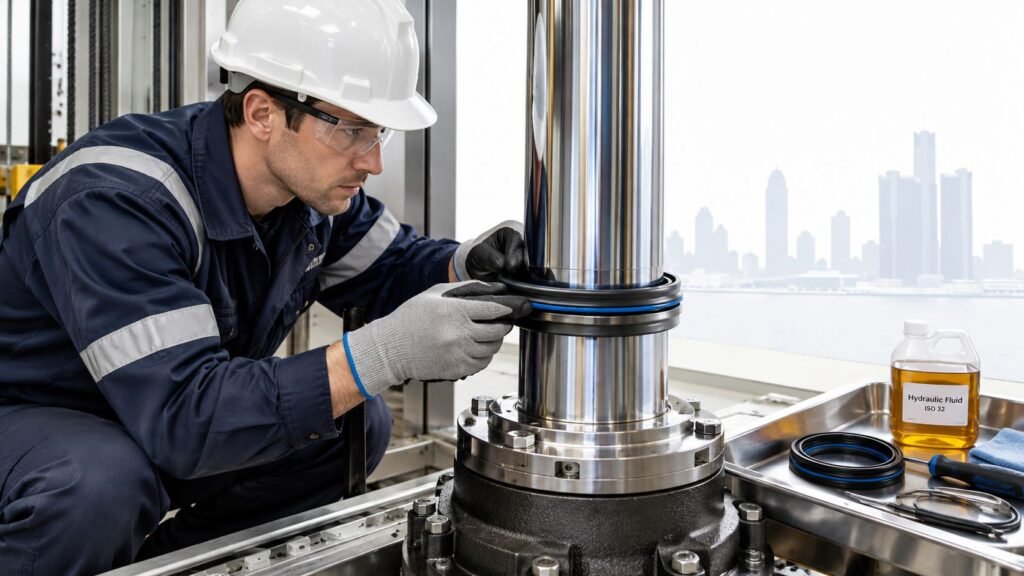
The call usually starts with a complaint about oil in the pit. The elevator still runs, so someone may suggest wiping down the cylinder head and watching it for a while. That approach misses the mechanical issue. The hydraulic elevator packing seal is responsible for containing pressure around the moving piston, and a leak can indicate worn packing, a damaged rod, poor alignment, contamination, or a problem that will fail the required safety verification.
A packing replacement isn't just a parts swap. It changes a safety-critical part of the hydraulic system, which means the work must end with a documented integrity check. In Michigan, that standard matters whether the elevator serves a hospital in Detroit, a school in Lansing, a condominium in Ann Arbor, or an industrial building near Grand Rapids.
Why Hydraulic Elevator Packing Seals Matter for Safety and Performance
A hydraulic packing seal sits at the cylinder head, where the piston exits the cylinder and travels with the elevator car. Its job is demanding. It must hold hydraulic oil and pressure inside the cylinder while allowing the piston to move repeatedly through the sealing surface. The related packing elements and wiper also help control excess oil and keep dirt, moisture, and other contaminants away from the internal sealing area.
A service call often begins with a small amount of oil around the cylinder head. Some seepage can be part of normal operation because a moving piston seal isn't perfectly dry. The concern starts when oil collects in the pit, drips visibly, increases between inspections, or appears alongside rough movement, rod damage, rust, or pressure loss.
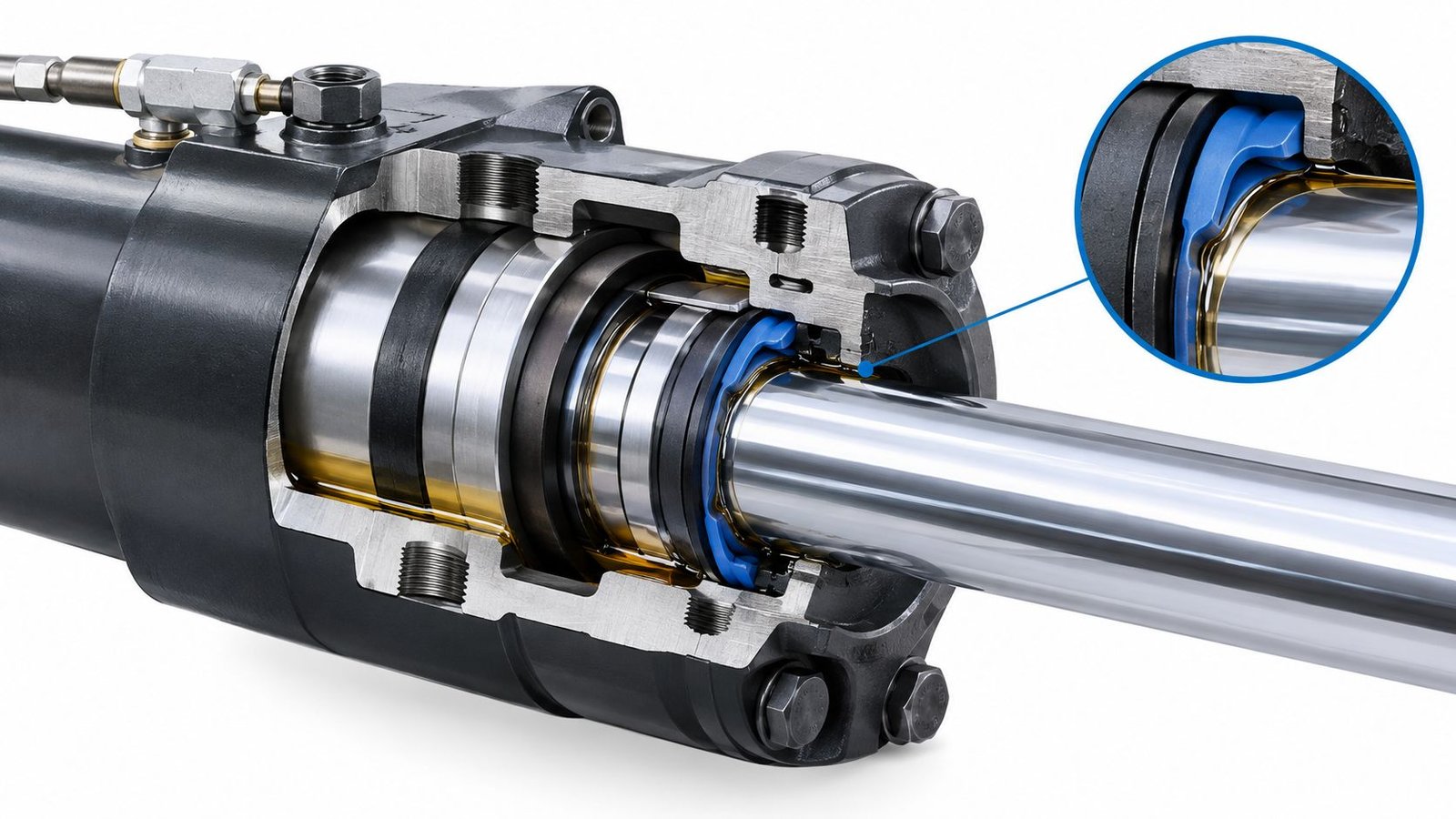
The cylinder head is part of the pressure system
The packing doesn't work in isolation. The piston surface, cylinder head, wiper, drainage channels, hydraulic oil, and alignment all affect how well the assembly performs. A nicked piston can damage a new seal. A blocked drainage path can make a modest amount of controlled seepage look like a major leak. Rust or loose hardware can also compromise the head and create recurring trouble after replacement.
The practical failure isn't limited to housekeeping. Excess oil can contaminate the pit, attract debris, and make inspection conditions worse. Air intrusion and unstable pressure can contribute to uneven operation, vibration, or loss of holding performance. A mechanic who replaces only the visible packing without checking the surrounding components may stop the symptom briefly and leave the cause in place.
Replacement requires verification
U.S. elevator code treats this work as a safety-related repair. ASME A17.1 Section 8.6.5.5 requires hydraulic system integrity to be verified at relief-valve pressure for not less than 15 seconds when a cylinder, seal, or pressure-piping component is replaced, as described in Missouri elevator guidance on oil leakage and hydraulic seal work.
That test turns packing replacement into a functional safety check. The elevator shouldn't return to service merely because the new seal is installed and the head looks clean. A qualified technician needs to inspect for leakage during operation, confirm the system holds pressure, document the test, and address any remaining rust, misalignment, or oil accumulation.
Crane Elevator serves Michigan buildings in Detroit, Lansing, Ann Arbor, Grand Rapids, and surrounding communities. The same field discipline applies in Kalamazoo, Flint, Holland, Traverse City, Jackson, Muskegon, and smaller towns where a hydraulic elevator may be just as important to daily operations.
How Packing Seals Work and What Normal Looks Like
A packing head uses several parts that perform different jobs. The primary packing seal applies controlled pressure against the moving piston. A rubber wiper ring sits above it and helps remove excess oil from the piston while keeping outside contaminants from entering the cylinder head.
The seal material must remain pliable enough to follow piston movement, but strong enough to withstand hydraulic pressure. Temperature changes also matter. Hydraulic fluid expands and contracts as operating conditions change, so the packing assembly has to accommodate that movement without losing control of the sealing interface.
Read the assembly from the inside out
Start with the piston. It moves through the packing and carries a thin film of hydraulic oil with it. That film provides lubrication, so trying to force the interface completely dry can create friction and accelerate wear.
Next comes the packing seal, sometimes called a gland or gland ring. It limits the amount of oil that travels beyond the cylinder head while maintaining contact with the piston. Above it, the wiper ring catches excess oil and helps keep grit, water, and other contaminants away from the seal area.
The correct objective isn't absolute dryness. Training material for hydraulic elevator maintenance describes a correctly installed seal as allowing a tiny amount of fluid escape, with the wiper collecting that excess. Controlled micro-leakage can be normal. Active dripping, pooling, or rapidly increasing oil loss is not.
What a technician checks during normal operation
A clean head and stable oil film are better signs than a perfectly dry piston. The technician should look for a pattern rather than judge one isolated observation.
- Oil film: A light film that remains controlled by the wiper may be acceptable.
- Wiper condition: The ring should sit correctly, remain flexible, and keep contaminants from being drawn inward.
- Piston surface: Scoring, rust, or rough areas can cut the packing and cause early failure.
- Movement quality: The car should travel and level consistently without unexplained hesitation or drift.
- Drainage path: Channels around the head must remain open so collected oil can be identified and managed.
A hydraulic elevator's pump and power unit also affect how the cylinder behaves. For background on the connected equipment, review Crane Elevator's hydraulic elevator pump service information. The packing still deserves its own inspection because a sound pump can't compensate for a damaged sealing interface.
Signs Your Hydraulic Packing Seal Is Failing
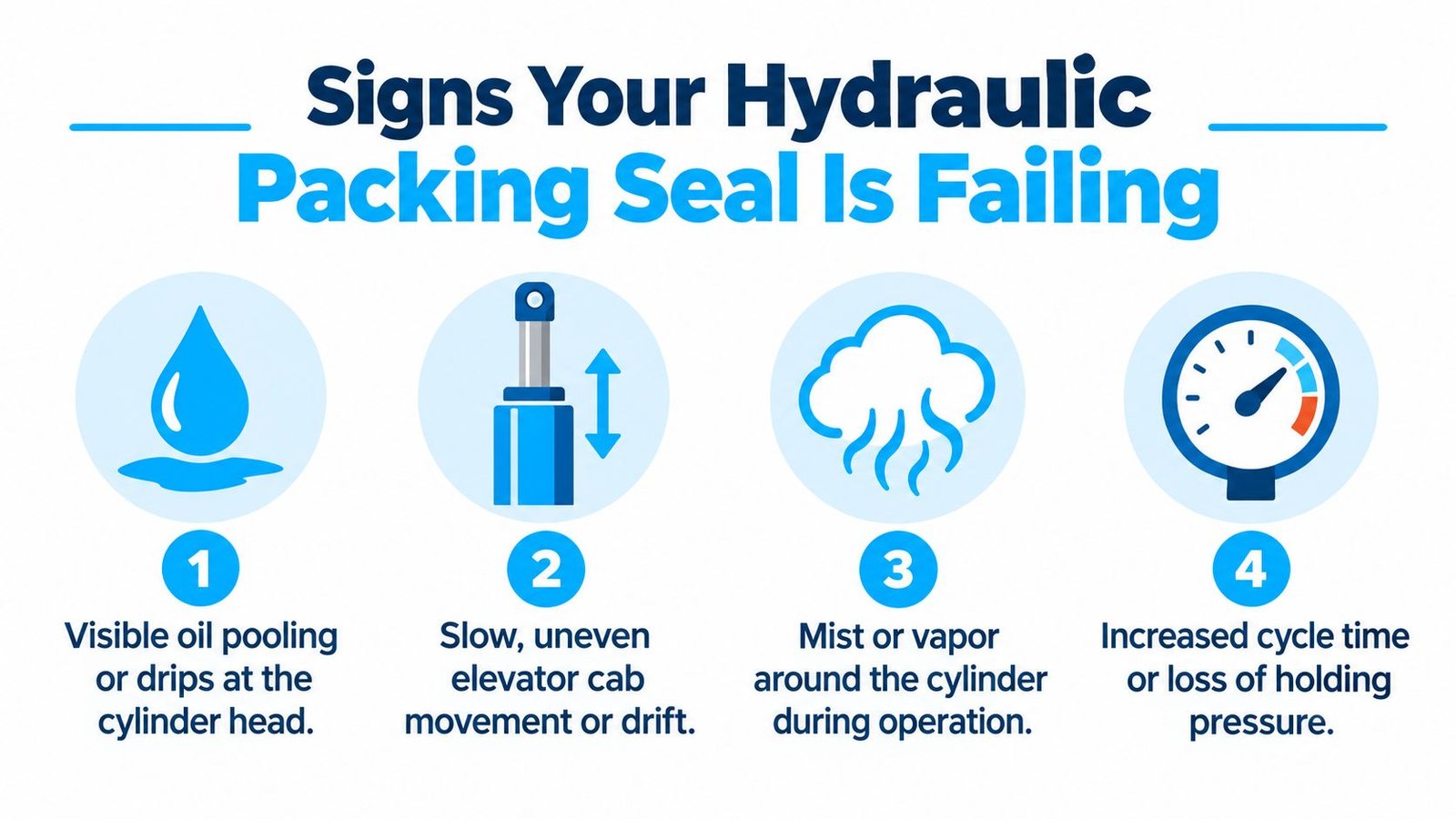
The first useful distinction is between controlled seepage and excessive leakage. A small amount of oil may travel with the piston during normal operation, but the wiper should collect it and the drainage path should prevent uncontrolled accumulation. Once oil drips, pools, or repeatedly returns after cleaning, the packing assembly needs a qualified evaluation.
Look at the cylinder head and pit together
Oil at the top of the cylinder is the most obvious sign, but the pit often tells the longer story. Check whether fluid is collecting below the head, whether the drainage channels are blocked, and whether the amount increases after normal elevator use. Missouri guidance uses a practical intervention threshold, stating that leakage collected from the cylinder packing gland should not exceed 5 gallons before removal. That benchmark is documented in Missouri's elevator maintenance guidance.
Other physical findings deserve attention at the same time:
- Active weeping: Oil appears continuously around the cylinder head instead of remaining as a controlled film.
- Pit accumulation: Oil reaches the pit floor or collection area and keeps returning after cleanup.
- Rust: Corrosion on the head, piston, fasteners, or nearby components can damage the sealing path.
- Hardware problems: Loose, damaged, or deteriorated fasteners can prevent the packing head from staying properly positioned.
- Alignment concerns: A piston that enters the head off-center can wear one side of the packing faster than the other.
Watch the ride, not just the leak
Hydraulic packing problems can show up in performance before the leak becomes dramatic. Slow or uneven car movement, longer cycles, drift, rough starts, and inconsistent leveling all warrant inspection. These symptoms don't prove that packing is the only cause, but they tell the mechanic to evaluate the cylinder, oil condition, pump, valve, and pressure behavior as a system.
A new packing won't correct a scored piston or an alignment problem. It may conform briefly, then wear along the same damaged path. That's why a proper diagnosis records the visible leak, checks the rod surface, and compares the physical evidence with the car's operating behavior.
Call a qualified provider: If oil is actively dripping, collecting in the pit, or accompanied by rough travel, drift, rust, or pressure loss, take the elevator out of normal service as appropriate and arrange a qualified inspection.
Inspecting and Replacing a Hydraulic Elevator Packing Seal Safely
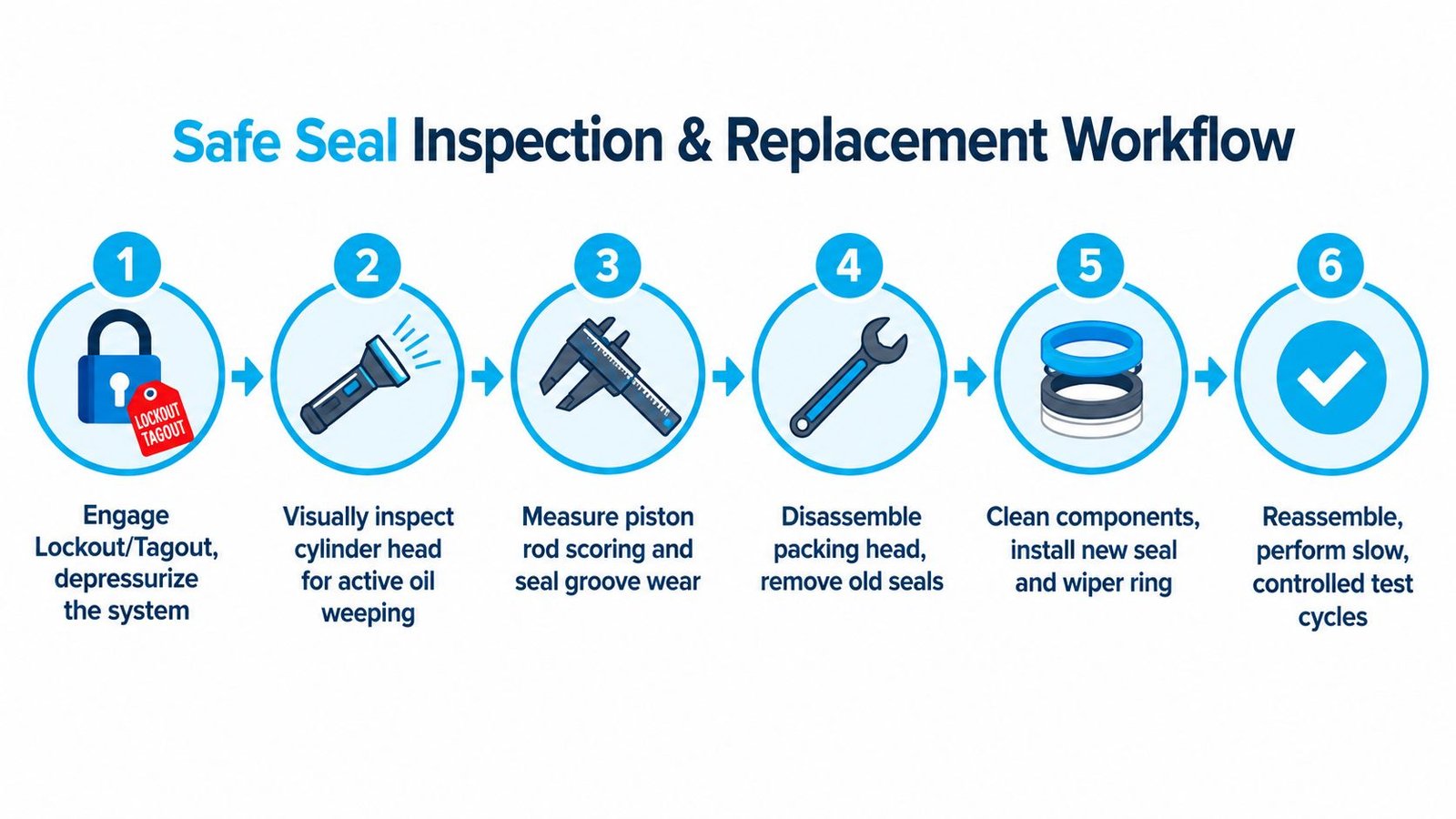
Packing work starts with energy control, not with a wrench. The elevator must be secured against unintended movement, the hydraulic system must be depressurized, and the technician must follow the building's lockout and tagout requirements. Stored hydraulic energy can move the piston or release oil unexpectedly, so nobody should work around the cylinder head on the assumption that the car is parked.
Secure the equipment and establish the condition
After lockout and depressurization, inspect the cylinder head before taking it apart. Look for active oil weeping, hardened or damaged packing, a distorted wiper, rust, loose fasteners, blocked drainage channels, and signs that the piston is entering the head off-center.
Clean the exterior first. Dirt around the head can hide the source of leakage and fall into the sealing area during disassembly. Use clean materials and keep replacement components protected from grit, water, and shop debris.
The piston surface deserves close attention. Run a careful visual and tactile inspection over the accessible area, looking for scoring, rust, pitting, burrs, or a wear pattern concentrated on one side. If the piston is damaged or the head is misaligned, replacing the packing alone is unlikely to provide durable service.
Clean the drainage path before fitting new parts
Oil that has nowhere to go can make a controlled leak appear worse and can keep the head wet after the original defect is corrected. Clean the head, surrounding surfaces, and drainage channels so the technician can distinguish fresh leakage from residue left by the old failure.
Check the wiper ring and packing groove for embedded dirt or hardened oil. Don't scrape sealing surfaces with a tool that can create a new scratch. The replacement seal needs a clean, sound groove and a piston surface that won't cut its lip during the first operating cycles.
Install the packing and wiper in the correct orientation
Remove the old packing without damaging the head or piston. Compare the replacement parts with the removed components and confirm that the kit matches the jack, head configuration, piston dimensions, oil, and pressure requirements.
The packing must sit fully in its groove and face the correct pressure direction. The wiper belongs above the primary packing and should face outward to remove contaminants from the piston as it retracts. Lubricate compatible sealing surfaces with the system's hydraulic fluid, not an unknown lubricant that could attack the material or contaminate the oil.
The installation should also include a check of:
- Seal seating: Confirm the packing isn't twisted, pinched, or partially out of its groove.
- Wiper contact: Verify that the wiper contacts the piston without being folded or torn.
- Head condition: Replace or repair damaged components rather than tightening around a defect.
- Alignment: Correct the condition that caused uneven wear before declaring the repair complete.
- Cleanliness: Keep lint, grit, metal fragments, and old seal material out of the cylinder.
For building owners and facility managers, Crane Elevator's hydraulic elevator cylinder seal repair service addresses the packing, jack, and related inspection work as a connected repair rather than treating the oil spot alone.
Perform the required pressure verification
Reassemble the head and restore the system under controlled conditions. The elevator must then be operated at relief-valve pressure for not less than 15 seconds, as required by the cited ASME maintenance provision and reflected in the applicable Missouri elevator memorandum.
The technician should observe the cylinder head, piston travel, pit area, and pressure behavior during and after the test. The record should identify the replaced component, the test performed, observed leakage, and any corrective work still required. A unit that passes a visual reassembly check but fails the relief-pressure verification isn't ready to return to service.
Skipping the pressure test creates uncertainty. The repair may look finished while the system still leaks, loses pressure, or exposes a deeper cylinder problem.
Slow, controlled operating cycles after reassembly help confirm that the piston travels smoothly and that the new packing and wiper remain correctly seated. If leakage returns, stop treating it as a simple seal issue and investigate rod condition, alignment, head damage, oil condition, and system pressure.
How to Choose the Right Packing Seal for Your Jack
Seal selection starts with the jack and application, not with the cheapest package that appears to fit. Pressure-balanced gland seals are identified in independent elevator parts guidance for 0 to 1500 psi applications, with each seal 5/8 inch thick and one or two seals used to form a positive seal under the specified conditions. These specifications are summarized in the hydraulic packing selection guide.
The technician still has to verify the actual jack, head design, oil, and material compatibility. A seal that matches thickness but doesn't match the pressure environment or fluid can leak, swell, harden, admit air, or wear quickly.
Use a field identification sequence
Begin by identifying the jack and application. Confirm the piston dimensions, head arrangement, existing packing configuration, and operating pressure. Then determine whether the application calls for one seal or two, rather than assuming the count from a similar elevator.
Next, verify the seal material against the hydraulic oil in the system. Material compatibility is not a paperwork detail. An incompatible compound can lose flexibility or fail to maintain its sealing shape, while an under-rated seal may extrude or leak under operating pressure.
Finally, inspect the piston and head before ordering. If the piston is scored or the groove is damaged, a correctly sized seal won't solve the underlying problem.
Packing Seal Selection by Pressure and Application
| Seal Type | Pressure Rating | Thickness and Count | Best Use Case |
|---|---|---|---|
| Pressure-balanced gland seal | 0 to 1500 psi | 5/8 inch each, one or two seals | Hydraulic elevator jack applications that match the specified pressure and head configuration |
| Replacement packing set | Confirm from jack and application | Confirm required seal count and dimensions | Repairs where the existing assembly must be matched to the cylinder head and piston |
| Wiper ring paired with packing | Works as part of the packing head, not a standalone pressure rating | Confirm profile and fit | Collecting excess oil and limiting contaminant entry above the primary seal |
What fails when selection is guessed
A seal can be the right general shape and still be wrong for the job. Undersized or under-rated packing may allow persistent leakage, air entry, contamination, or cavitation-related operating problems. Incorrect material can react poorly with the oil, while the wrong seal count can prevent the head from developing a positive seal.
Good parts identification includes photographs, old component markings, piston measurements, head details, oil type, and the operating symptoms. That information costs less than installing an uncertain kit, testing it, removing it again, and explaining a repeat callback.
Preventive Maintenance Tips to Extend Packing Seal Life
Preventive work is mostly disciplined observation. A technician who checks the cylinder head, wiper, drainage channels, piston surface, and pit condition during routine service can identify a deteriorating packing seal before oil accumulation becomes the dominant problem.
Keep the drainage path clean and record changes in seepage. A clean pit makes it easier to tell whether fresh oil is appearing, while a dirty or wet area can conceal the source. Check for rust, loose fasteners, rod damage, and alignment concerns instead of treating each leak as an isolated seal replacement.
Use the lifecycle as a planning reference
A 2019 Technical Safety BC case document reported an average packing gland lifespan of 8 to 9 years on a hydraulic jack, as cited in the technical review discussing hydraulic packing and seal development. That isn't a promise that every seal will last the same period. Oil condition, duty, temperature, piston condition, alignment, installation quality, and inspection practices all affect service life.
The practical use of the benchmark is planning. If a packing assembly is approaching that range, review its condition during scheduled maintenance rather than waiting for visible pit oil or a failed test. Replacement should still be based on inspection and system evidence, not on age alone.
Keep the entire elevator serviceable
Hydraulic packing is one part of a much larger maintenance program. Service may also involve the jack, tank, power unit, motor, sheave, machine components, door locks, safety tests, emergency phone, fire service, generator testing, and code violation corrections. A provider that works across equipment types can address connected faults without forcing a building owner into a proprietary repair path.
Crane Elevator Company is a family-owned contractor serving Michigan and Ohio with over 25 years of hands-on experience, offering non-proprietary maintenance, repairs, inspections, and modernization for all makes and models. Its service area includes Detroit, Lansing, Ann Arbor, Grand Rapids, Perrysburg, Toledo, Jackson, Muskegon, Flint, Kalamazoo, and surrounding communities, with coverage for passenger elevators, freight elevators, residential units, wheelchair lifts, material lifts, and dumbwaiters.
For ongoing care, elevator preventative maintenance from Crane Elevator can be evaluated alongside the building's inspection schedule, pit conditions, and packing history. The stated program includes full clean-downs of machine rooms, pits, and car tops, and uses a No Show, No Pay maintenance policy. The company also provides 24/7/365 response, free second opinions, competitive quotes, and non-proprietary modernization options.
Arrange a packing seal inspection before a small oil film becomes a pit cleanup, pressure-test, or cylinder repair problem. Crane Elevator Company provides hydraulic packing and jack service, repairs, code-required inspections, preventative maintenance, and complete elevator service for Michigan buildings, so visit Crane Elevator Company to request an inspection or quote.