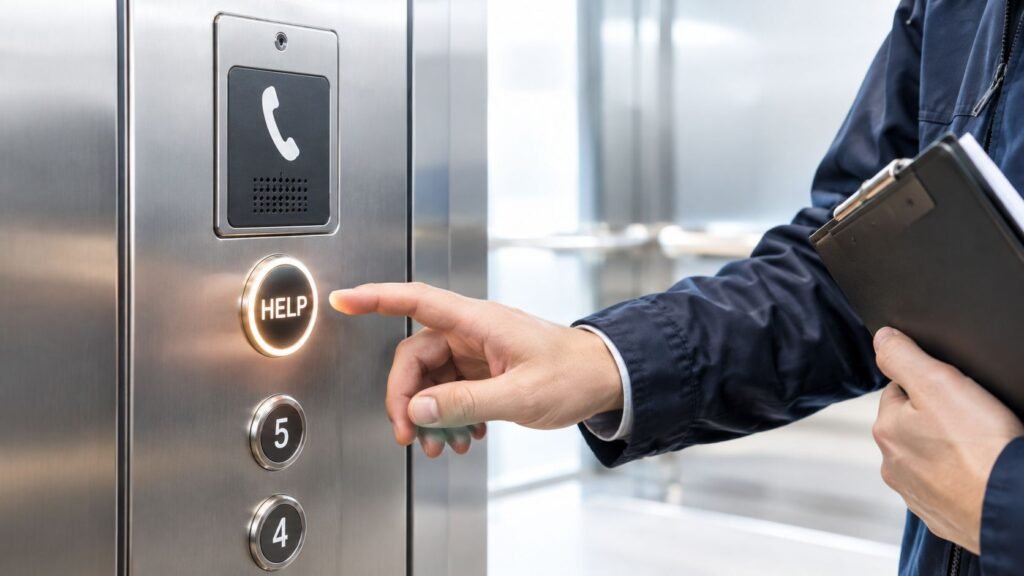
A passenger is stuck between floors late in the day. They press the button marked HELP and wait. The elevator emergency phone may produce a dial tone, but that alone doesn't mean the passenger has reached someone who can identify the car and send help.
For a facility manager, the question isn't whether a phone is mounted in the elevator. It's whether the button, communication path, call routing, location information, and human response work together. Treat the system as life-safety equipment, then test the entire chain.
What Happens When a Passenger Pushes HELP
In a Kalamazoo office building, an elevator stops between floors and a passenger presses the HELP button. The button should initiate a two-way call, and an indicator should confirm that the call has been received. On the other end, an authorized responder needs to hear the passenger, identify the building and elevator, and know how to act.
If the call lands at an unattended desk, goes to voicemail, or reaches someone without the information needed to dispatch help, the system has failed its essential purpose. The equipment may be powered and the phone line may be active, but neither fact proves that a trapped passenger can get assistance.
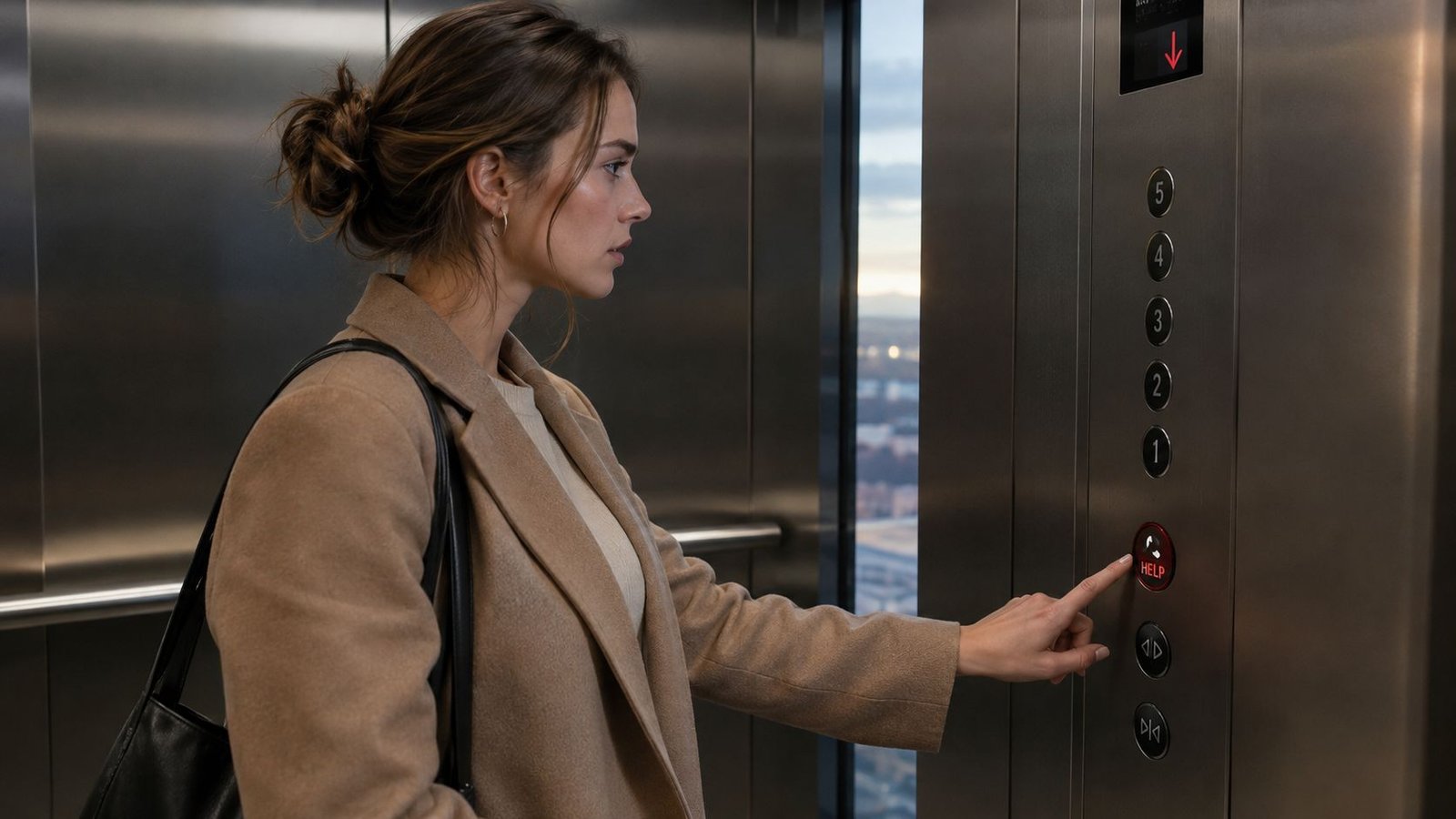
That's why I advise managers to judge an elevator emergency phone by the complete call, not by a quick check for a dial tone. The call must connect, provide usable two-way speech, confirm receipt, and reach personnel who can respond. The routing must also account for an unanswered call.
Practical rule: A test passes only when a capable person receives the call and can identify which elevator needs help.
For buildings across Michigan and Ohio, this means checking the device in the car and the answering arrangements behind it. The sections below cover the equipment, the code obligations, practical testing, and the response policy that keeps an emergency call from ending in silence.
The Core Components of an Elevator Emergency Phone
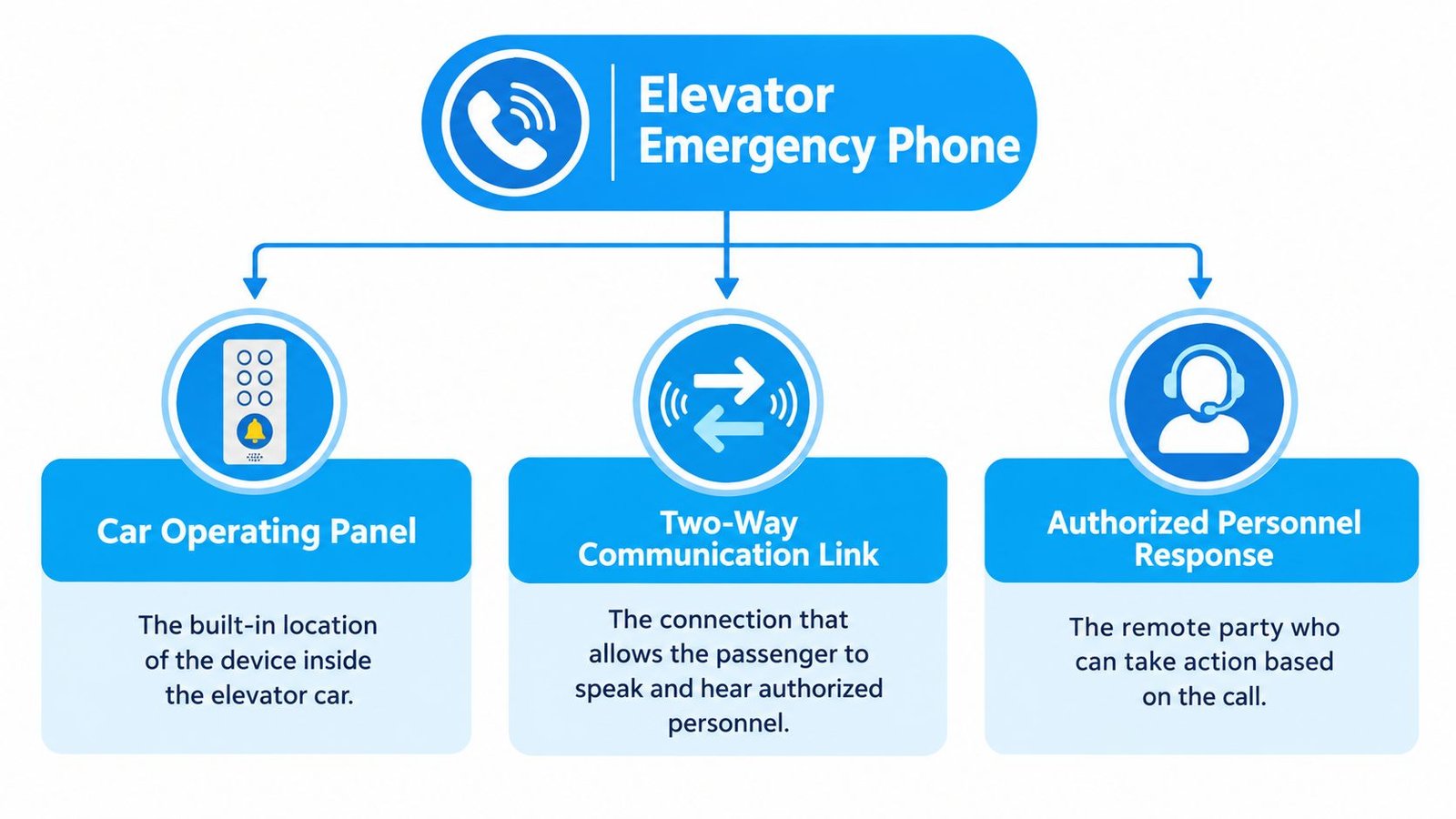
An elevator emergency phone works only when its controls, connection, and receiving endpoint operate together. ASME A17.1 requires a push-button-activated means of emergency communication connected to personnel authorized to take action. For a facility manager, that means checking the complete path, not just the hardware in the car.
The passenger-facing controls
The HELP button starts the call. Its tactile telephone symbol and clear label help passengers find and use it, including passengers with vision impairments. Keep operating instructions beside the control so a trapped passenger does not have to guess what to do.
The visual indicator shows that the call has been received. It belongs on the same panel as the help button and should remain lit while the communication link is active, then turn off when the link ends. If the button activates without clear confirmation, the passenger may not know whether the call went through.
The communication and response path
The two-way speech path must let the passenger and responder hear one another clearly. Test it from inside the car. A connection shown as active at a monitoring desk does not prove that speech is intelligible in the elevator.
The routing logic decides where the call goes and what happens if the first destination does not answer. Set up a backup destination that is staffed, and confirm its personnel know how to identify the elevator and arrange a response. A live dial tone is no measure of success if the call ends at voicemail or with someone unable to act.
Treat the panel, communication link, and responder as one system during inspection. Confirm each part works with the others, rather than signing off because the phone is present.
The diagram shows how the panel, link, and responder fit together. The following video provides a visual overview.
Code and ADA Requirements Facility Managers Should Know
Requirements vary by adopted code edition. Before auditing the cab, verify which ASME A17.1 version your jurisdiction enforces and which requirements apply to the installation. Review the Access Board's ADA elevator provisions alongside that code review. Accessibility and emergency response belong in the same compliance assessment.
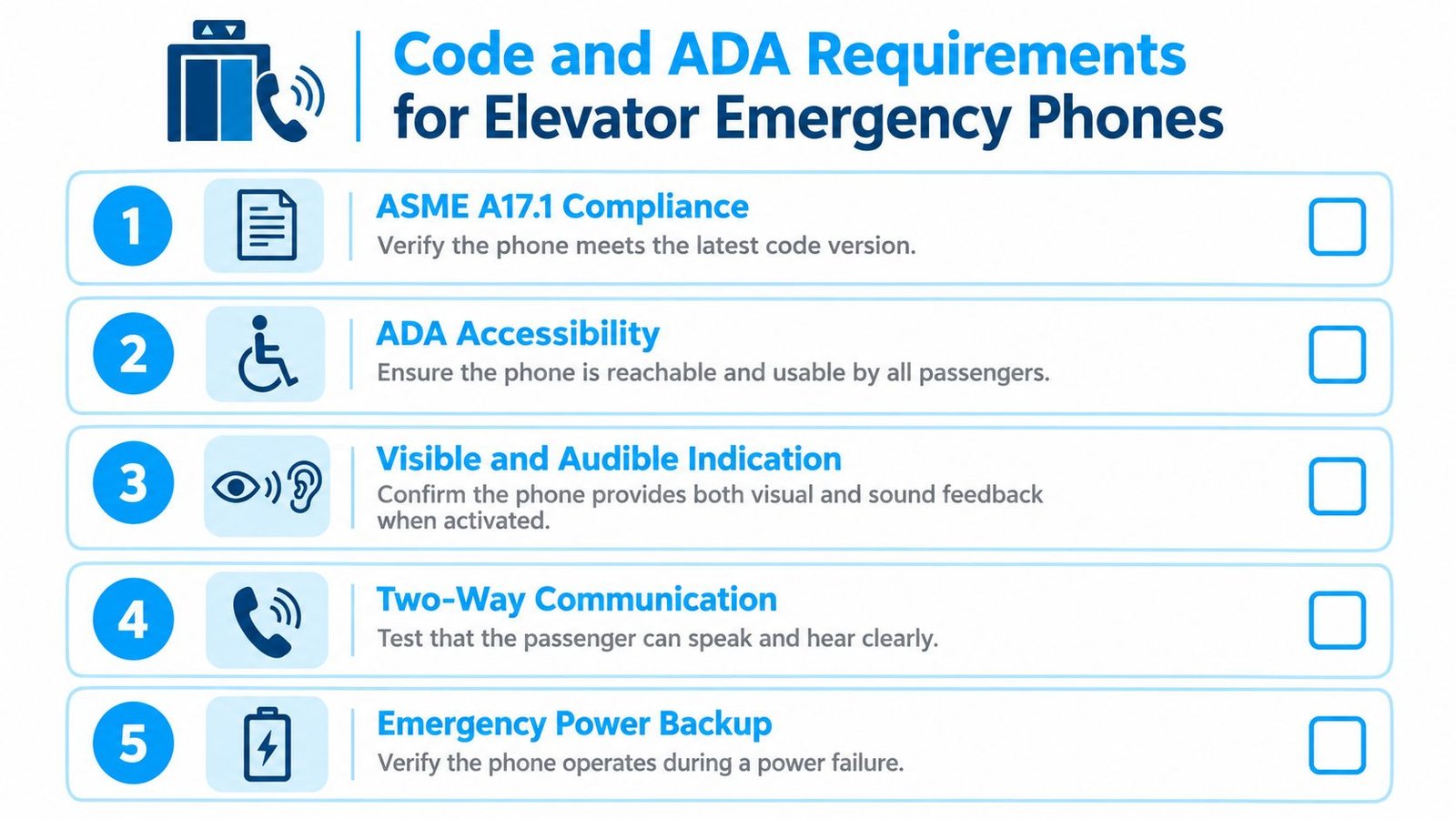
An unanswered emergency call needs a defined destination. The cited ASME-based technical guidance describes automatic redirection to an alternate on-site or off-site location when a call has not been acknowledged within 45 seconds. Check that requirement against the adopted edition, then confirm that the configured destination has personnel authorized to act. An unattended desk or voicemail leaves the response path incomplete.
What to verify on site
Use these compliance checkpoints to guide the inspection:
- Two-way communication: Confirm that the installed system supports intelligible communication between the passenger and responder.
- Accessible controls: Check the panel against the applicable accessibility provisions, including identification and operating instructions.
- Call acknowledgment: Verify that the indicator's operation meets the requirements for the installed system.
- Authorized response: Establish who receives calls, how they identify the building and car, and who arranges assistance.
- Automatic backup routing: Confirm the alternate destination and the redirection requirement that applies to your installation.
Resolve jurisdictional responsibility before scheduling work.
Michigan's state Elevator Section administers and enforces the Michigan Elevator Code statewide, including installation and alteration inspections and annual safety inspections. Detroit also maintains an Elevator Inspection Team with city-level responsibilities. These include elevator and related-device inspections, journeyperson and contractor licensing examinations, complaint investigations, and elevator-accident reporting. Consult Detroit's inspection and licensing information to clarify the city's role.
Use Crane Elevator's ADA requirements guidance as an additional reference when reviewing your Michigan facility. Confirm code adoption and inspection expectations with the responsible authority, and include the answering location in the review. A compliance sign-off should account for the passenger's ability to reach someone who can identify the car and arrange a response.
Testing and Maintenance Best Practices
A working dial tone proves only that a connection exists. It doesn't prove that a passenger can be heard, that the call reaches an available responder, or that the responder receives useful location information.
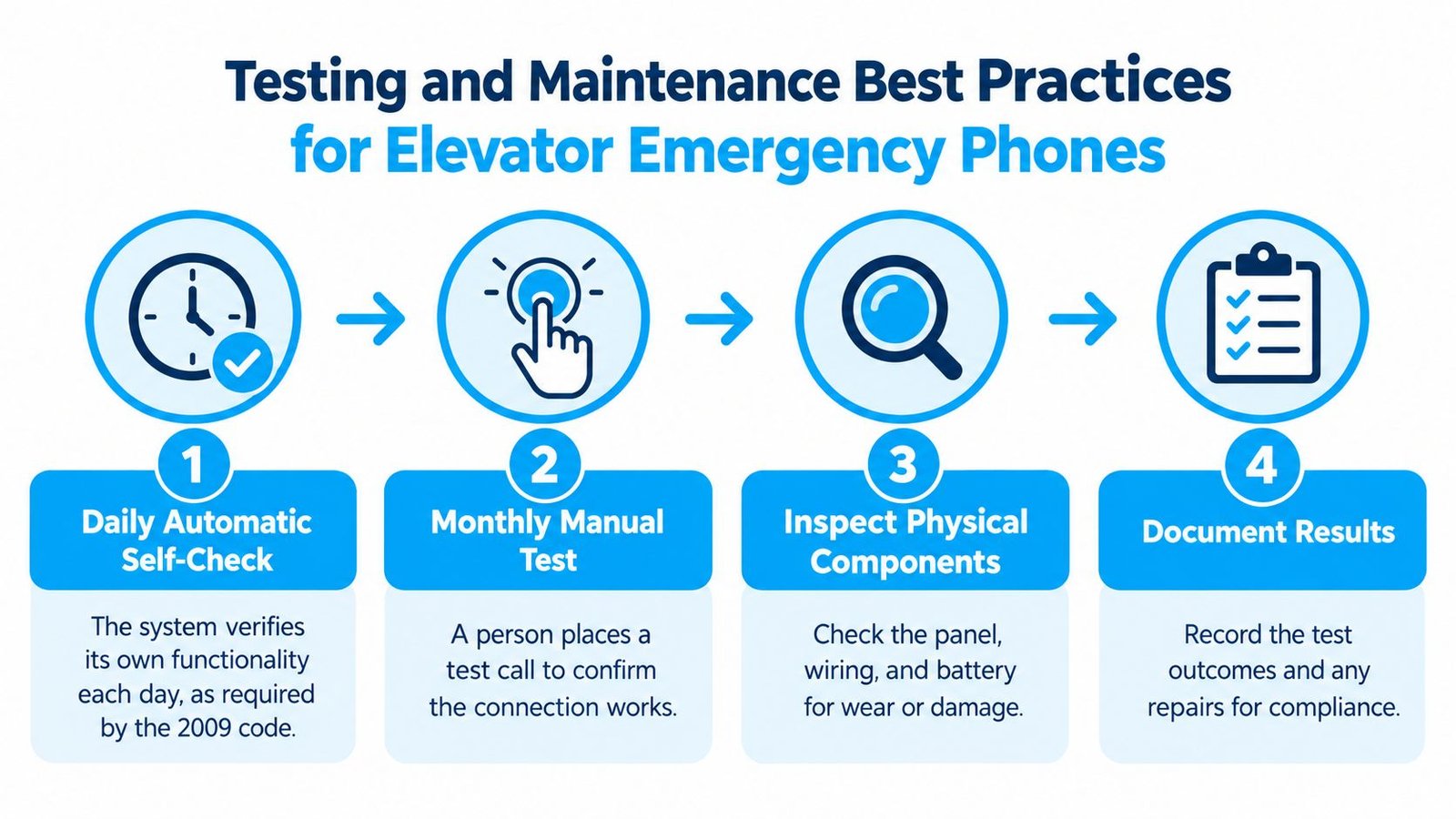
The elevator code introduced an automatic daily self-check requirement in 2009. If the communication line wasn't operational, the system had to trigger visual and audible notification at the designated level. The code-history discussion explains why line verification is a longstanding safety function.
Test the full call, not just the line
Use a recurring test process that checks both the device and the response procedure:
- Review the daily self-check. Confirm that the system records its automatic verification and that any fault notification reaches the designated person.
- Place a manual test call. Have an authorized person answer, confirm clear two-way speech, and verify the building and elevator identification.
- Test the backup route. Simulate the primary answering point being unavailable and confirm that the call is redirected to a staffed destination.
- Inspect the physical equipment. Check the panel, visible indicators, wiring condition, and power-related components for damage or obvious faults.
- Record the results. Log the date and time, responder, elevator identification, speech quality, indicator behavior, routing outcome, and any repair or follow-up needed.
Set a regular manual testing schedule and document it. The code's daily automatic self-check doesn't replace a practical test of whether a human can answer and act. Likewise, a manual call that reaches a person doesn't verify that automatic fault detection is working.
Keep records where maintenance staff and building management can find them. A useful log shows more than “tested.” It should make clear who answered, whether the caller and responder could communicate, and whether the location details were correct. Crane Elevator's elevator testing information can help managers understand how testing fits into ongoing elevator service.
Crane Elevator's maintenance program includes clean-downs of machine rooms, pits, and car tops, along with its No Show No Pay policy. That kind of consistent service routine can help catch equipment and communication issues before a passenger discovers them during an entrapment.
Signage and Placement Standards for Elevator Phones
A passenger shouldn't have to search for the emergency control. Use a quick cab audit to check whether the controls are easy to find and understand.
Start with the HELP label and tactile symbol. The emergency control must be permanently identified with the tactile telephone symbol and the word HELP. Check the tactile and Braille identification, too, so a passenger with vision impairments can locate the control. Instructions should explain how to initiate the call in plain language.
Look at the button's position in relation to the other controls. It should be readily identifiable on the car operating panel, not visually lost among unrelated buttons or hidden in a difficult-to-reach spot. Accessibility is not just about placing a control inside the car. Passengers need to be able to reach and operate it.
Check the call confirmation
The visual indicator belongs on the same panel as the help button. Confirm that it clearly signals receipt of the emergency call and extinguishes when the communication link ends. A light that's hard to see, stays on after the connection ends, or gives no clear indication of receipt can create confusion.
The referenced ASME-based requirements also reject vulnerable handset designs and closed compartments. Don't accept an installation that hides the communication control or leaves a passenger unsure how to use it.
A control that meets a checklist on paper still needs to be obvious to someone who is frightened and unfamiliar with the cab.
Inspect the panel under ordinary building conditions, then ask whether a visitor could quickly identify the emergency control without help. If labels are worn, instructions are missing, or the indicator is obscured, correct the issue as part of the inspection follow-up. Keep the full interface usable, not merely present.
Answering Point Policy and Response Procedure
A passenger presses HELP after the building office closes. The call connects, but the person answering cannot identify the elevator or dispatch assistance. Your answering policy must prevent that failure.
Document the primary answering location, backup destination, and person responsible for escalation. Specify who contacts building staff, elevator service personnel, and emergency responders. Give the answering party the building address and elevator identification needed to locate the passenger. Assign responsibility for keeping those details current.
The responder must be authorized and equipped to act.
Wisconsin elevator guidance states that calls cannot terminate at an answering system, requires automatic verification of operability at least daily, and requires the responding party to receive building and elevator identification. Keep those Wisconsin provisions distinct from the requirements applicable to your Michigan property. Use the written procedure to establish who takes action, how assistance is dispatched, and how the response is confirmed.
Plan for after-hours calls
Healthcare, education, municipal, and industrial facilities need coverage beyond office hours. Name the after-hours answering point and confirm its staffing. If the security desk closes, arrange automatic routing to an attended alternate destination. Confirm that the alternate responder has the same location details and escalation contacts.
For elevator travel exceeding 60 feet, The referenced technical guidance identifies an accessible on-site phone for emergency personnel to communicate with passengers.
Record responsibility for each stage, including confirmation that assistance reached the correct car. When reviewing Michigan service arrangements, use Crane Elevator's Michigan and Ohio service overview to inform the elevator-service contact portion of your procedure. Keep answering coverage and dispatch responsibility explicit. A service contact belongs in the policy alongside named responders, routing destinations, and escalation instructions.
How Crane Elevator Supports Emergency Phone Service Across Michigan
A facility in Detroit may need emergency-phone work alongside inspection follow-up, repairs, or maintenance. A property in Lansing, Ann Arbor, or Grand Rapids may have the same communication questions across a different mix of elevators and building uses. Crane Elevator Company supports elevator work across these markets and surrounding Michigan communities.
The company's service covers passenger elevators, freight elevators, residential elevators, wheelchair lifts, material lifts, and dumbwaiters. That breadth matters for managers overseeing mixed properties: emergency communication shouldn't be treated as relevant only to one elevator type. Michigan's elevator program regulates installation, alteration, repair, maintenance, servicing, inspection, adjustment, and testing of elevating devices, so service needs can extend across new and older equipment. Michigan's elevator permit information describes the state program's scope.
Major cities and surrounding towns
Crane's service coverage can extend to communities such as Flint and Kalamazoo, as well as Toledo and Perrysburg in Ohio, alongside Detroit, Lansing, Ann Arbor, Grand Rapids, and surrounding areas. The state Elevator Section administers the Michigan Elevator Code statewide, while Detroit has a separate city inspection function. Knowing which authority applies helps managers prepare for inspection and address local requirements.
Crane's work includes maintenance, repairs, modernization, inspections, and code-related assistance. Its service offering also includes emergency phones, alongside broader elevator needs such as safety tests, fire service, generator testing, and violation corrections.
For a manager, the practical move is to include the emergency phone in the wider service conversation. Ask for the call path to be tested, the answering point confirmed, and any fault or repair documented. That keeps communication reliability connected to the elevator's overall maintenance and inspection plan.
Facility Manager FAQ on Elevator Emergency Phones
How do I prove the emergency phone works?
Keep records of automatic self-checks and manual tests. A useful test record confirms two-way speech, call acknowledgment, correct building and elevator identification, a human responder, and successful backup routing.
Who counts as authorized personnel?
The call must reach personnel who can take appropriate action. A voicemail box or unattended answering system doesn't meet that practical standard. Name the responsible primary and backup locations in the response policy.
How often should we retest?
The system's automatic operability check must run at least daily under the cited guidance. Also schedule and document manual tests that verify the full call and response procedure, including the backup destination.
What if the phone connects but calls drop?
Treat dropped calls as a failure, even if a dial tone is present. Record when the fault occurs, arrange service, and keep the elevator emergency communication issue open until a complete test call reaches a responder and stays intelligible.
Crane Elevator Company provides elevator maintenance, repairs, inspections, and emergency-phone service across Michigan and Ohio. If your call routing, phone operation, or inspection records need attention, contact Crane Elevator Company to discuss the next steps for your building.