A facility manager usually hears about a sheave problem indirectly. The elevator develops a faint vibration, passengers report an uneven stop, or a technician finds that one section of hoist rope is wearing faster than the rest. The controller may show no obvious fault, and the motor may sound normal. Yet the trouble can be sitting at the physical contact points that transfer motion and load every time the car travels.
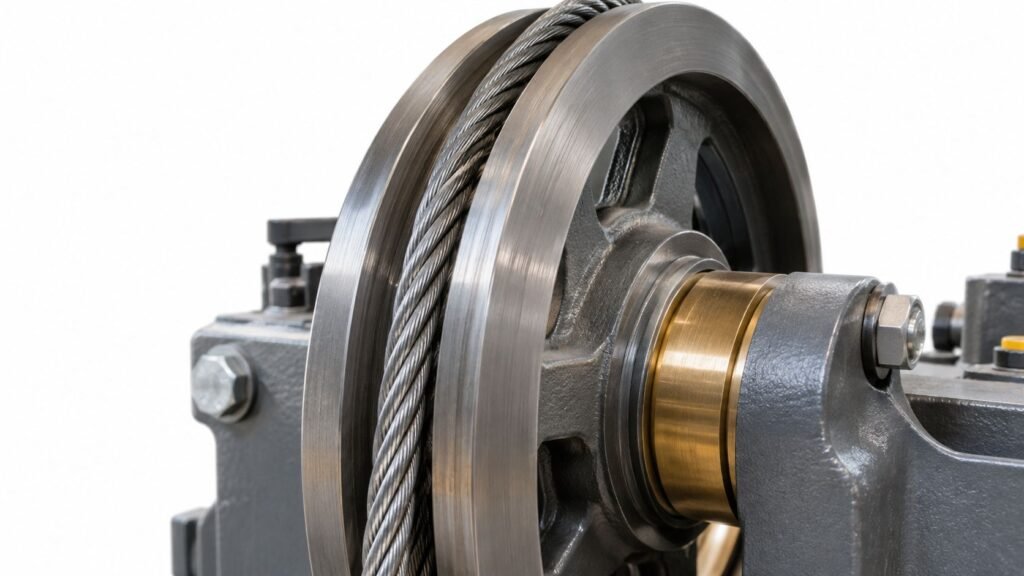
Elevator sheaves and bushings are working components, not passive hardware. The sheave guides and grips the steel ropes, while the bushing or bearing lets the wheel rotate under load. Groove condition, hardness, rope tension, shaft alignment, and bearing play all influence the same friction system. A small defect in one part can create vibration, abrasion, noise, and loss of traction somewhere else.
Understanding Elevator Sheaves and Bushings
A sheave is the grooved wheel around which an elevator's steel hoist ropes travel. On a traction elevator, the traction sheave transfers motor torque through friction between the rope and groove. Deflection sheaves redirect the rope path, helping arrange the reeving without being the primary driving surface.
The bushing or bearing sits between the rotating sheave and its shaft. Its job sounds simple, but the operating demand is severe. It must support the wheel, preserve alignment, and allow smooth rotation while the ropes impose changing loads. If the interface develops play, the sheave can wobble rather than turn on a stable axis.
Why small changes become ride complaints
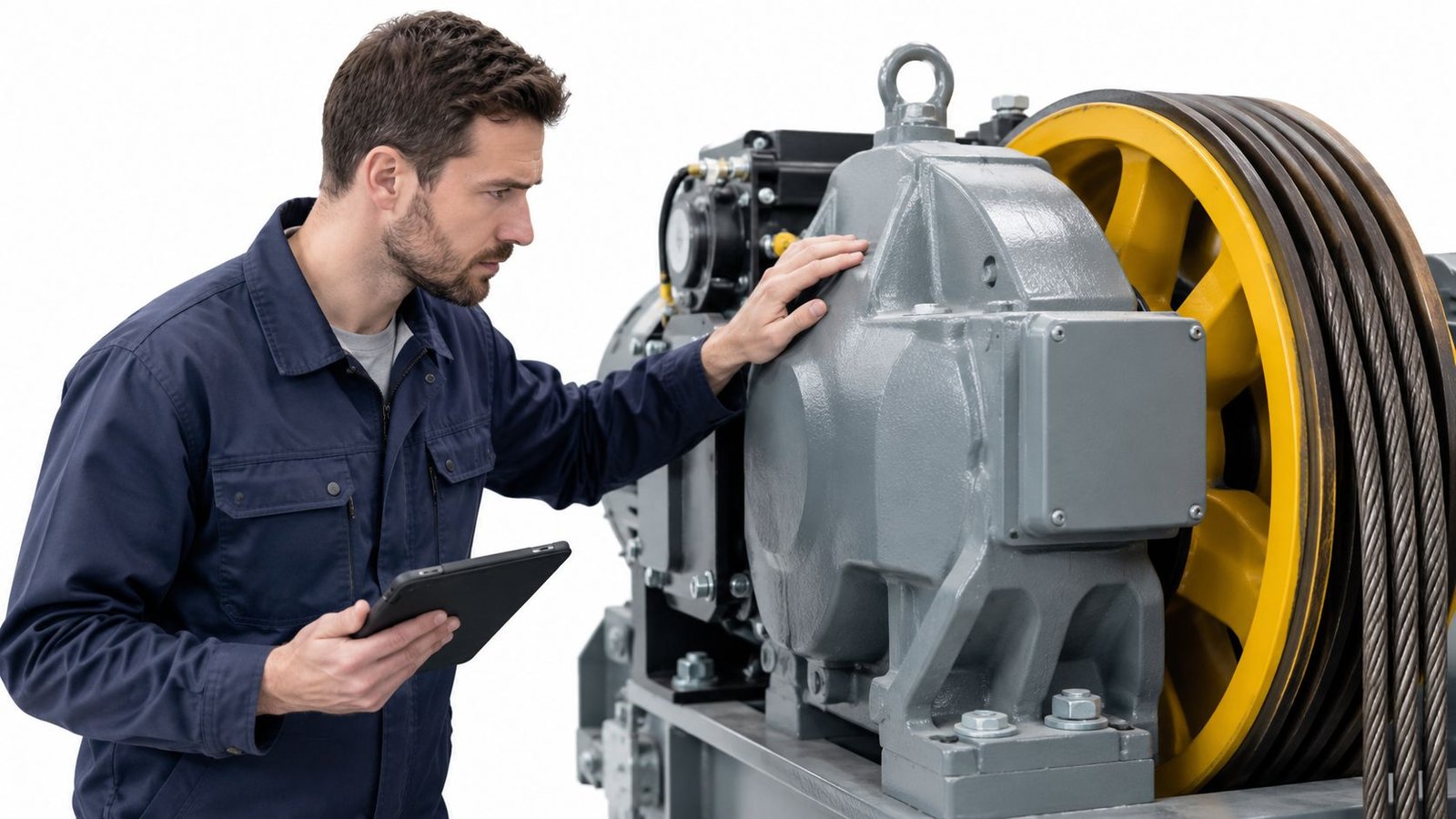
A facility team may first notice a symptom at the car, but the source can be in the machine room. A worn groove changes how the rope seats. A worn bushing changes how the sheave rotates. Unequal tension then loads some rope strands more heavily than others, creating a cycle of abrasion and vibration.
The rope is harder than the sheave, so the sheave continuously wears during operation. Once the rope seats into the groove, it can reduce the sheave diameter over time. Technical guidance also associates longer service life with sheave hardness above the lower hardness range, while a hard, tight sheave can damage wire rope in as little as two years under operating conditions described in the industry bulletin (technical guidance on traction sheave wear and hardness).
Field rule: Treat a change in ride quality, rope appearance, or machine-room noise as a mechanical clue, not merely a comfort complaint.
The important point for a building owner is that these parts affect the whole vertical transportation system. A sheave can still look serviceable while its groove geometry has changed. A bushing can still be turning while its clearance is allowing damaging movement. Reliable maintenance therefore depends on measuring condition rather than only deciding whether the metal looks worn.
How Traction and Deflection Components Work Together
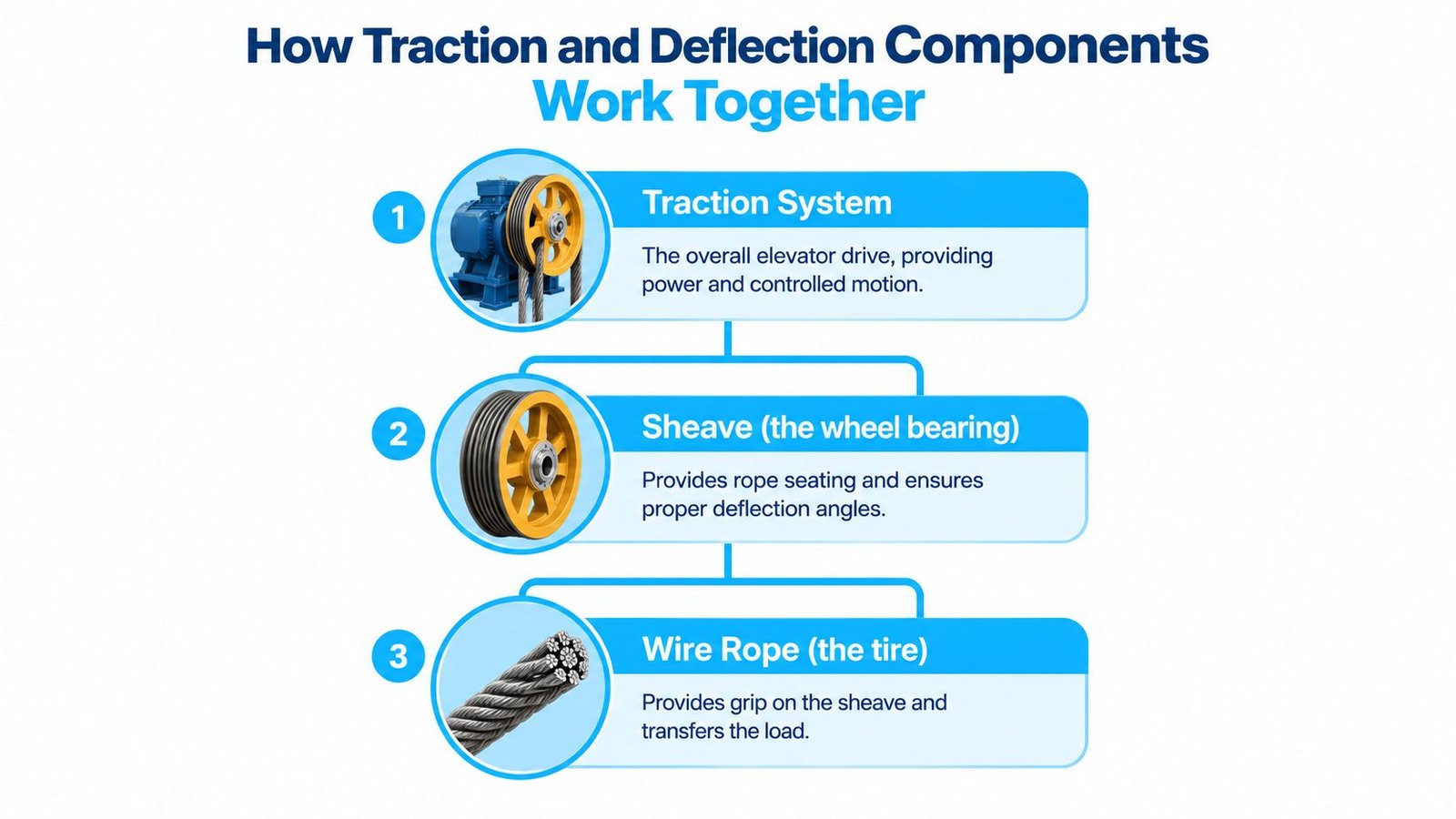
Think of the rope as a tire, the sheave groove as the road surface, and the bushing as the wheel bearing. The tire must maintain contact with the road, while the bearing must keep the wheel centered. If either relationship deteriorates, the vehicle becomes noisy and unstable. In an elevator, the consequences include rope wear, slippage, vibration, and inaccurate leveling.
The mechanical relationship works in a sequence:
- The motor applies torque. The traction machine turns the traction sheave.
- The groove holds the rope. Friction between the rope and groove transfers the driving force.
- The rope carries the load. The hoist ropes move the car and counterweight through the reeving arrangement.
- The bushing supports rotation. The sheave must remain aligned with the shaft while rotating under changing rope tension.
- Deflection sheaves redirect the path. They guide the ropes without serving as the main source of drive.
Traction is not the same as redirection
A traction sheave must provide enough grip to prevent the rope from slipping while avoiding excessive pressure that destroys the rope and groove. A deflection sheave has a different primary task. It changes direction and maintains the intended rope path, but it still needs a sound groove and a stable bearing.
A failing bushing makes the distinction important. When the bearing interface allows wobble, the sheave can apply uneven pressure around the rope path. That movement may create side wear even if the traction groove itself has not reached its replacement condition. On a deflection sheave, excess noise or wobble can indicate bearing failure, which is why federal maintenance guidance specifically identifies those symptoms during inspection (federal sheave and bearing maintenance guidance).
Unequal rope tension worsens the problem. The rope no longer shares load evenly, and the resulting vibration can travel through the machine frame into the car. Cleaning the groove may remove dirt, but it won't correct clearance, misalignment, or a damaged rope. Lubricating an appropriate bushing may reduce friction, but it won't restore lost material or eliminate radial movement.
For facility managers reviewing system design or repair options, the distinction between traction and hydraulic elevators also matters because sheave and rope maintenance is central to traction equipment, while hydraulic systems use a different lifting method.
The practical lesson is straightforward. Rope condition, groove profile, bushing clearance, and machine alignment must be assessed as one system. Replacing only the loudest part can leave the force that caused the damage in place.
Recognizing Wear Indicators and Failure Symptoms
A visual inspection can identify a cracked component or an obviously damaged groove, but it can't reliably reveal every loss of traction margin or bearing clearance. Modern groove profiles make that limitation more important. Undercut U grooves and progressive V grooves increase groove pressure, which helps resist rope slip, but the higher pressure also accelerates wear in both the rope and sheave (traction groove geometry and wear trade-offs).
That is the hidden trade-off. A groove designed to pinch the rope more aggressively may improve anti-slip performance when it is correctly matched to the rope. As the profile wears, however, the friction conditions change. Groove shape can alter early in service, then continue losing diameter as the form rounds out. The pinching effect falls, traction decreases, and the elevator may develop slip, vibration, noise, or leveling errors (research on sheave groove wear and traction behavior).
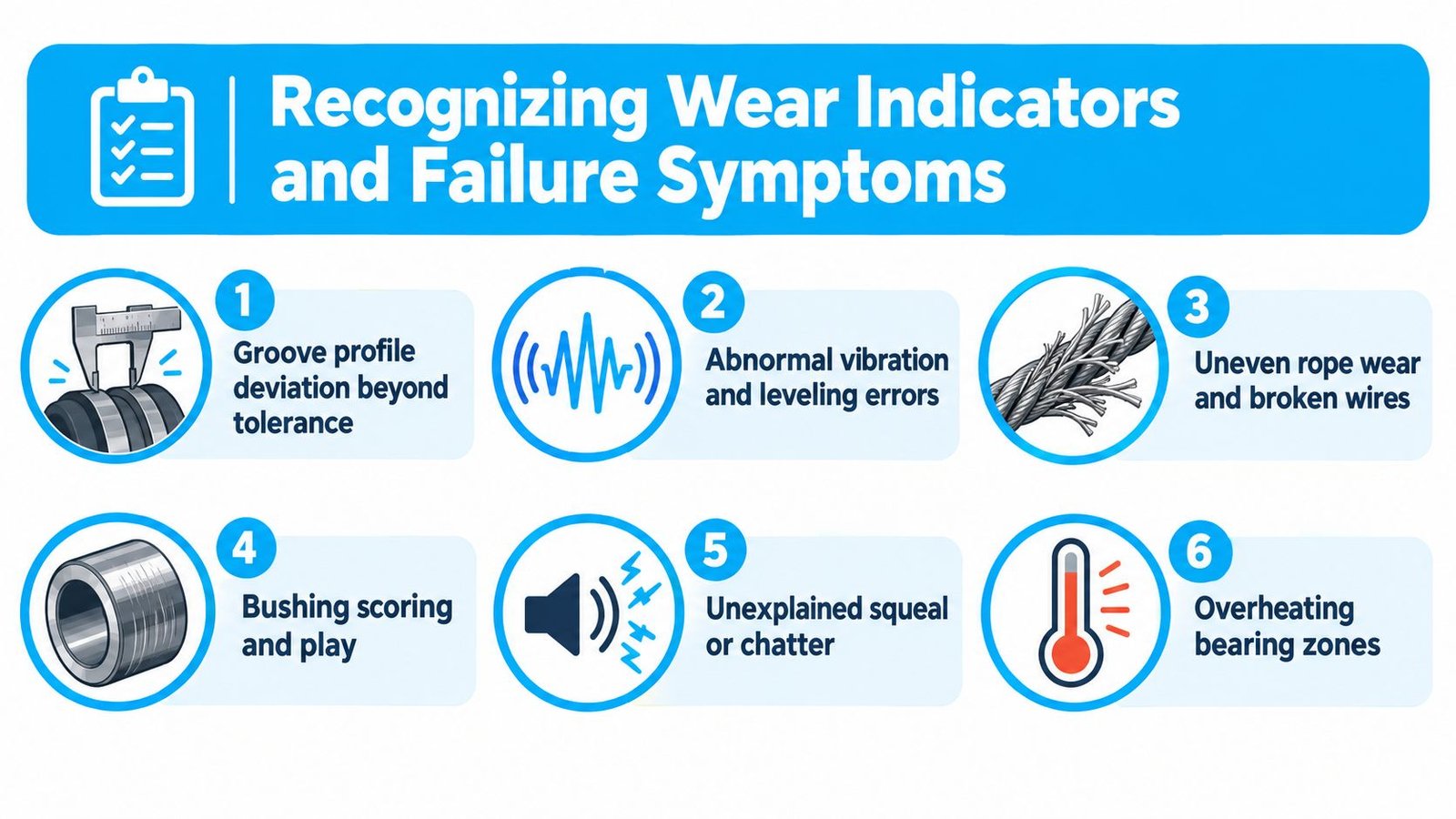
What to look for in the machine room
The following symptoms deserve a measured inspection rather than a quick clean-down:
- Rope seating below the groove: The rope appears to sit unusually deep, indicating that the groove has lost material or its profile no longer matches the rope.
- Axial or radial play: The sheave moves along the shaft or shifts at the rim, suggesting bushing or bearing clearance.
- Audible wobble: Repeating noise, chatter, or a cyclic sound can indicate eccentric rotation, uneven tension, or bearing damage.
- Uneven rope wear: Polished, crushed, abraded, or otherwise inconsistent rope sections can point to groove or alignment problems.
- Excessive slip: The car may show inaccurate leveling or traction loss, particularly when the groove can no longer maintain its intended friction.
- Vibration and heat: A vibrating sheave or localized bearing heat indicates that rotation is no longer smooth.
A field-ready threshold matrix
Use the matrix below as a decision aid, not as a substitute for the applicable code, manufacturer instructions, or a qualified elevator inspection.
| Condition observed | Likely meaning | Immediate response |
|---|---|---|
| Dirt, rope dust, or light surface contamination with no play or profile change | Maintenance contamination rather than confirmed component failure | Clean, inspect, lubricate where specified, and document the baseline |
| Noise without measurable wobble, visible cracking, or abnormal rope wear | Possible lubrication issue, contamination, or early bearing friction | Remove the cause, then recheck operation and record the result |
| Measurable radial or axial play, recurring wobble, or unequal rope tension | Bushing or bearing deterioration, possibly combined with alignment trouble | Plan targeted bushing or bearing work and investigate alignment before returning to normal service |
| Groove wear with adequate remaining geometry and a sound sheave body | Regrooving may restore the intended profile if approved by the manufacturer and qualified technician | Verify dimensions, hardness, rope compatibility, and remaining section before choosing regrooving |
| Rope seating below the groove, persistent slip, or rounded profile with reduced traction | The friction system has moved beyond a simple cleaning issue | Restrict operation as appropriate and evaluate regrooving versus sheave replacement |
| Cracks, severe distortion, excessive play, or repeat wear after correction | Structural or systemic failure risk | Replace the affected assembly or component and correct the underlying rope or machine condition |
A borderline symptom deserves context. A low-use elevator with clean rope and stable alignment may justify a planned intervention after measurement. A heavily used hospital or commercial elevator showing worsening vibration and rope damage needs a more urgent response. The technician must determine whether the sheave is the cause, the victim, or both.
Inspection and Maintenance Best Practices
The industry has moved away from relying on visual checks alone. Modern condition-based maintenance uses measurable limits for groove depth, rope diameter, hardness, bearing clearance, and lubrication condition. That approach gives the owner a defensible maintenance record and helps the technician identify whether a component is deteriorating or merely dirty.
A practical inspection sequence
Start with the operating symptom. Record when the vibration, noise, leveling error, or rope wear appears. Does it occur during acceleration, travel, stopping, or only under a particular load direction? A repeating symptom often points toward rotation or rope seating rather than an electrical control fault.
Secure the equipment and inspect the rope path. A qualified technician should examine rope seating, groove cleanliness, visible scoring, broken wires, and tension differences. Measure steel wire rope diameter and traction groove depth at least annually, because reduced groove diameter and unequal tension can initiate a destructive wear cycle (maintenance guidance on annual rope and groove verification).
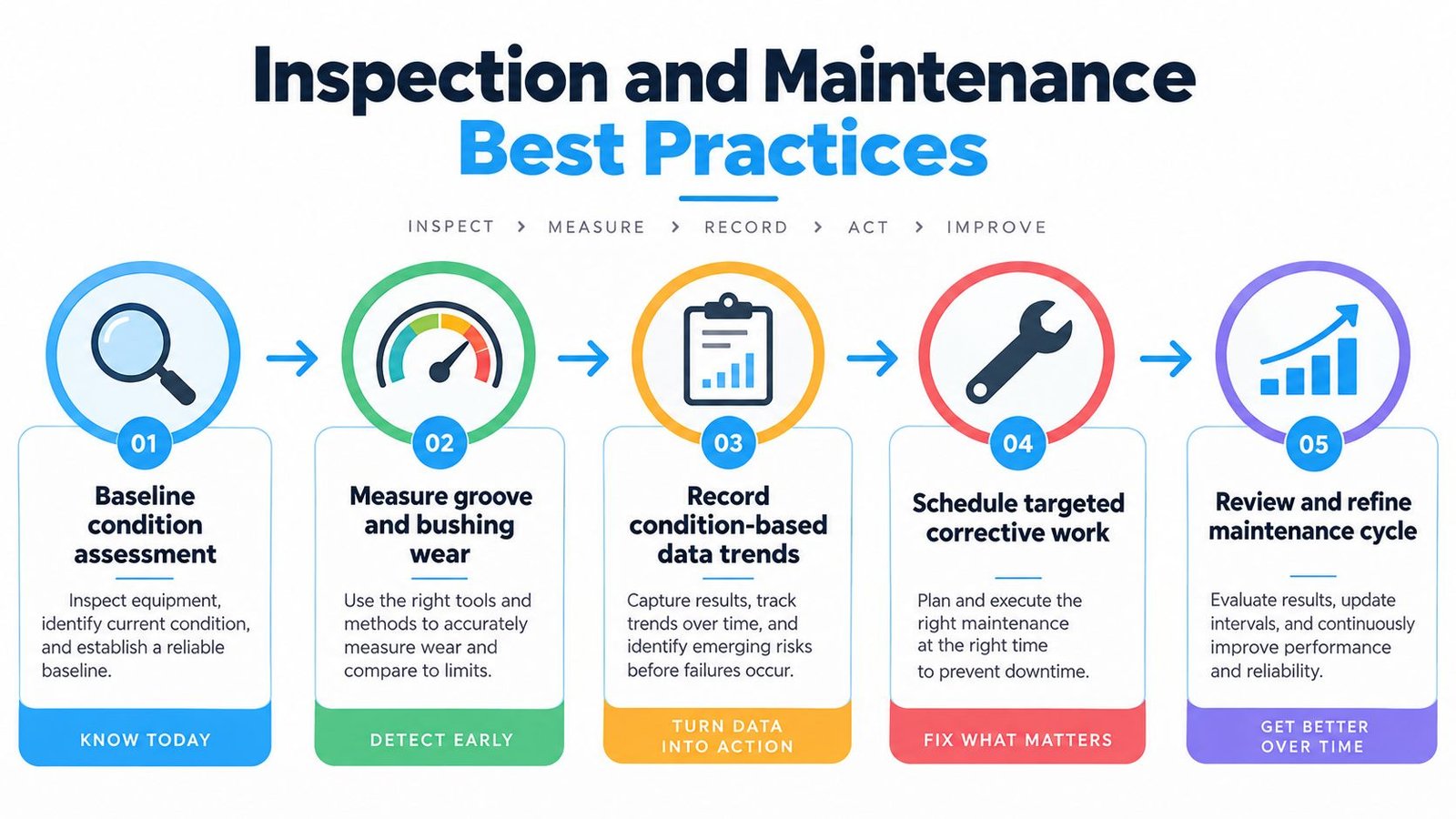
Measure instead of guessing. Use suitable sheave gauges to compare groove shape and depth with the applicable specification. Check the sheave hardness where required. Technical guidance identifies groove hardness above 200 HB as reducing the likelihood of wear and describes wear as highly unlikely above 210 HB (technical maintenance guidance on hardness thresholds). The same source discusses longer life for sheaves with a Brinell hardness of 220+, compared with those in the 210 range (traction sheave material guidance).
Inspect the bushing or bearing interface. Look for scoring, discoloration, lubricant breakdown, looseness, and movement at the rim. Worn bushings or bearings can produce wobble and unequal tensions, which then promote abrasion and vibration. Lubrication should follow the component and manufacturer requirements. Adding grease to a damaged or sealed interface won't restore clearance.
Sound the sheave where appropriate. Federal guidance calls for sounding sheaves with a hammer to check for cracks in spokes and hubs. A deflection sheave that produces excess noise or wobble may indicate bearing failure, and periodic inspections by a Qualified Elevator Inspector are associated with 6-month intervals in the cited guidance (sheave sounding and inspection recommendations.pdf)).
Link every reading to a maintenance decision. A useful preventative elevator maintenance program should record the original condition, the measured change, the suspected cause, the corrective work, and the follow-up result. That record helps prevent a recurring rope problem from being treated as a series of unrelated repairs.
Evaluating Replacement Criteria and Lifecycle Costs
The expensive mistake isn't always replacing too early. Sometimes it's replacing the sheave without correcting the rope tension, machine alignment, or bushing condition that caused the original wear. The new sheave then follows the same failure path, and the facility pays twice while the elevator loses more service time.
Regrooving can make sense when the sheave body remains structurally sound, the remaining section meets the applicable requirements, the groove can be restored to the correct profile, and the rope condition is acceptable. It doesn't make sense when cracks, severe distortion, inadequate remaining material, or persistent bearing movement are present. A new groove can't compensate for a sheave that no longer runs true.
Sheave and Bushing Intervention Matrix
| Wear Stage | Primary Symptoms | Recommended Action | Lifecycle Cost Impact |
|---|---|---|---|
| Early contamination or dry service condition | Dust, rope residue, light noise, no measurable play, stable groove profile | Clean thoroughly, lubricate only where specified, and establish measurements | Lowest intervention burden, provided inspection confirms no underlying damage |
| Early bushing deterioration | Intermittent noise, slight wobble, early tension difference, no confirmed groove failure | Replace or service the bushing or bearing as appropriate, then verify alignment and rope condition | Targeted work can avoid transferring damage into the sheave and ropes |
| Measurable groove wear with sound sheave structure | Visible profile change, deeper rope seating, stable shaft support, no cracks | Evaluate qualified regrooving against the approved groove profile and material limits | Often avoids full assembly replacement, but only if the remaining structure and hardness are acceptable |
| Combined groove and rope damage | Slip, vibration, leveling errors, uneven rope wear, rounded or unsuitable groove | Correct the cause, assess rope replacement, and choose regrooving or full sheave replacement based on measured condition | Delaying can turn a focused repair into coordinated rope, sheave, and machine work |
| Bearing or bushing failure | Persistent wobble, radial or axial play, heat, noise, unequal tension | Replace the bushing or bearing and inspect shaft, sheave bore, rope path, and alignment | Replacing only the bushing is economical only when the sheave and shaft remain within condition |
| Structural sheave damage | Cracks in spokes or hub, distortion, severe scoring, recurring failure after repair | Replace the sheave or complete assembly according to the equipment design | Higher immediate cost, but continued operation carries a greater risk of rope damage and disruption |
The friction system itself must guide the decision. As groove geometry rounds out and diameter falls, the sheave can lose the pinching effect that maintains traction. That can cause slippage, vibration, inaccurate leveling, and noise even when the wheel still appears intact.
Diagnostic rule: If a replacement sheave begins showing the same wear pattern, stop treating the sheave as the sole problem. Check rope tension, machine alignment, shaft condition, and the bushing interface.
For owners, lifecycle cost includes more than the invoice. It includes access, shutdown planning, rope damage, emergency response, passenger disruption, and whether the repair removes the initiating fault. A properly measured regrooving decision can preserve a sound assembly. A full replacement is justified when the material, geometry, bearing support, or structural condition no longer provides a reliable foundation.
Reliable Elevator Service Across Michigan and Ohio
A sound maintenance decision requires more than identifying a worn groove. The service team must inspect the rope, sheave, bushing, shaft, machine alignment, safety systems, and operating history as one reliability problem. That matters in a hospital, where vibration and leveling complaints can affect patient movement, and in a commercial or municipal building, where an avoidable shutdown quickly becomes an operations issue.
Crane Elevator Company provides elevator maintenance, repairs, code-required inspections, modernizations, and other elevator services across Michigan and Ohio. Its stated service area includes Detroit, Lansing, Ann Arbor, Grand Rapids, Toledo, Bowling Green, Findlay, Fremont, Defiance, Perrysburg, Flint, Jackson, Sterling Heights, Warren, Howell, Saginaw, Port Huron, Battle Creek, Kalamazoo, Livonia, Ypsilanti, Midland, and Bay City, along with surrounding communities and everything in between (Crane Elevator's regional service area).
The company describes a 24/7/365 service model that includes proactive preventative maintenance, fast repairs, code-required inspections, full non-proprietary modernizations, free second opinions, and a price-beat guarantee in Lower Michigan and Northwest Ohio (Crane Elevator's Toledo-area elevator repair services). That scope is relevant to sheave work because a recurring groove or bushing problem may require more than component replacement. Technicians may need to evaluate ropes, motors, machines, door equipment, hydraulic systems, safety tests, emergency phones, fire service, generator testing, or code violations.
For a facility manager in Detroit or Grand Rapids, that means the maintenance conversation can stay focused on measured condition rather than a one-part sales decision. For a property in Ann Arbor, Lansing, Toledo, Kalamazoo, or a smaller town such as Perrysburg, Bowling Green, Findlay, Fremont, Defiance, Jackson, Sterling Heights, Howell, Saginaw, Port Huron, Battle Creek, Livonia, Ypsilanti, Midland, or Bay City, the same practical standard applies. The right intervention is the one that restores the complete traction system and prevents the original failure mechanism from returning.
More information about Crane Elevator's regional elevator capabilities is available through its Michigan and Ohio elevator company services.
If your elevator is showing rope wear, vibration, leveling changes, or sheave noise, ask Crane Elevator Company for a condition-focused inspection of the sheave, bushing, rope, and machine alignment. Review repair, regrooving, replacement, inspection, modernization, and emergency service options by visiting Crane Elevator Company.