
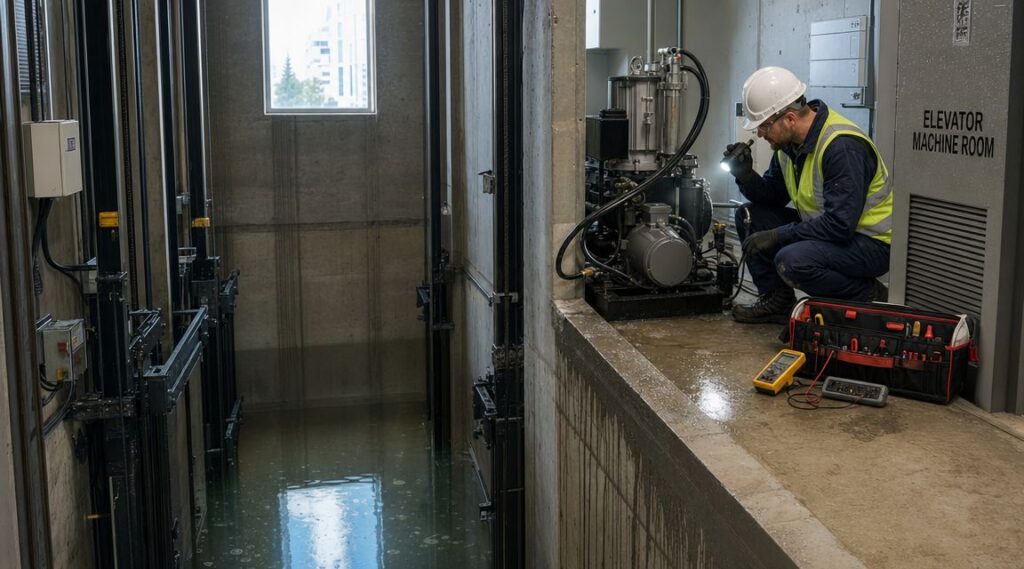
A lot of building managers find elevator water damage the same way. A tenant reports a wet lobby after a storm in Ann Arbor. A maintenance tech in Detroit notices water at the sill. A night crew in Lansing hears a sump alarm and finds dampness near the hoistway door. In that moment, the biggest mistake is treating it like a janitorial problem.
Water near an elevator is a safety event first and a repair event second. If water has reached the pit, machine room, controls, or door equipment, you have to assume there may be hidden electrical and mechanical damage even when the car still seems to run normally. That's why the first hour matters more than the first repair invoice.
Your First Steps After Finding Elevator Water Damage
The first move is simple. Take the elevator out of service and shut off power at the main disconnect using proper lockout and tagout procedures. Don't send the car to another floor. Don't “see if it still works.” Don't let staff cycle the doors one more time.
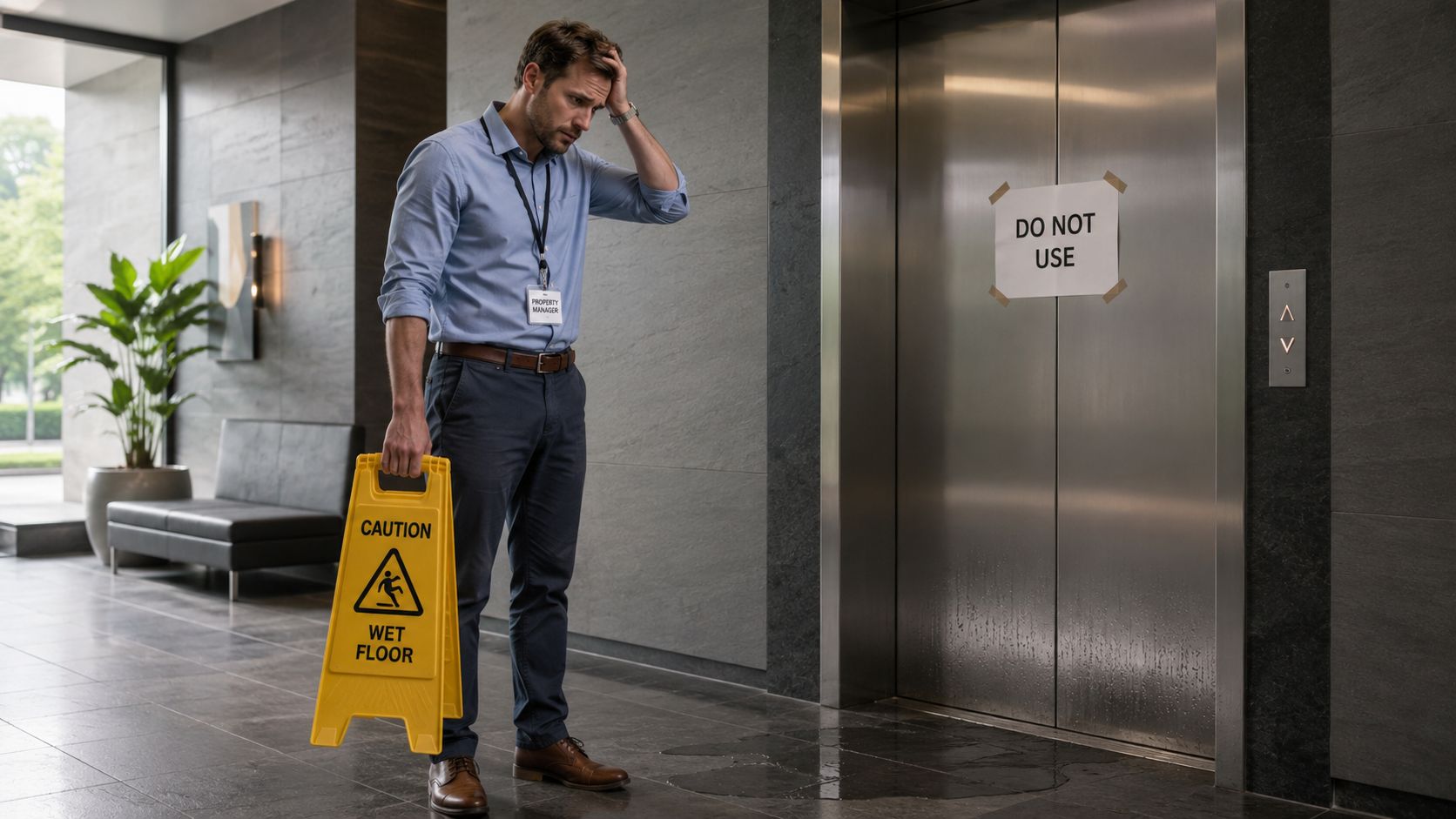
If someone is trapped inside, follow your building's emergency communication and rescue procedures and get qualified help involved immediately. If no one is inside, secure the landing, block access, and post the unit as out of service. Water and elevator equipment don't fail in predictable ways. A car can seem normal right up until a control fault, door fault, or short circuit takes it down.
What to do in the first few minutes
Start with these actions, in this order:
- Protect people first. Keep tenants, staff, and vendors away from the affected elevator and any wet floor area around it.
- Shut off power. Use the proper disconnect. If you're not trained to do that safely, call building engineering or emergency service support immediately.
- Stop the water source if it's obvious and safe. That might be a burst pipe shutoff, a roof drain issue, or a nearby plumbing valve.
- Do not enter the pit or touch wet equipment. Standing water may be energized, and wet components can fail without warning.
- Call for qualified elevator service. If you need immediate response, request emergency elevator repair.
Practical rule: If water is close enough to make you ask whether the elevator is affected, treat the elevator as affected until a technician proves otherwise.
This isn't being overly cautious. Water damage is a broad property risk, with around 14,000 U.S. water damage claims filed daily and an average payout of $11,605 according to water damage claim data for homeowners. Elevator incidents deserve even more caution because the equipment combines power, controls, moving doors, safety circuits, and hidden wiring runs.
What not to do
A few actions make the situation worse fast:
- Don't restart the unit. Dry surfaces don't mean dry insulation.
- Don't let a cleaner mop into the sill or doorway. That can push more moisture into electrical areas.
- Don't send general maintenance into the pit. Pit access during a water event is not routine housekeeping.
- Don't assume the issue is over because the rain stopped. Water often keeps migrating after the original leak slows down.
In Michigan, I'd treat a storm event in Grand Rapids the same way I'd treat a pipe failure in a Detroit high-rise. Calm response, controlled shutdown, documented conditions, then qualified inspection. That sequence protects people and usually reduces the scope of later repair.
A Systematic Checklist for Assessing Elevator Damage
Once the area is secure and the elevator is locked out, the next job is safe visual assessment. This is not a repair inspection. It's information gathering from areas you can observe without touching equipment or entering hazardous spaces.
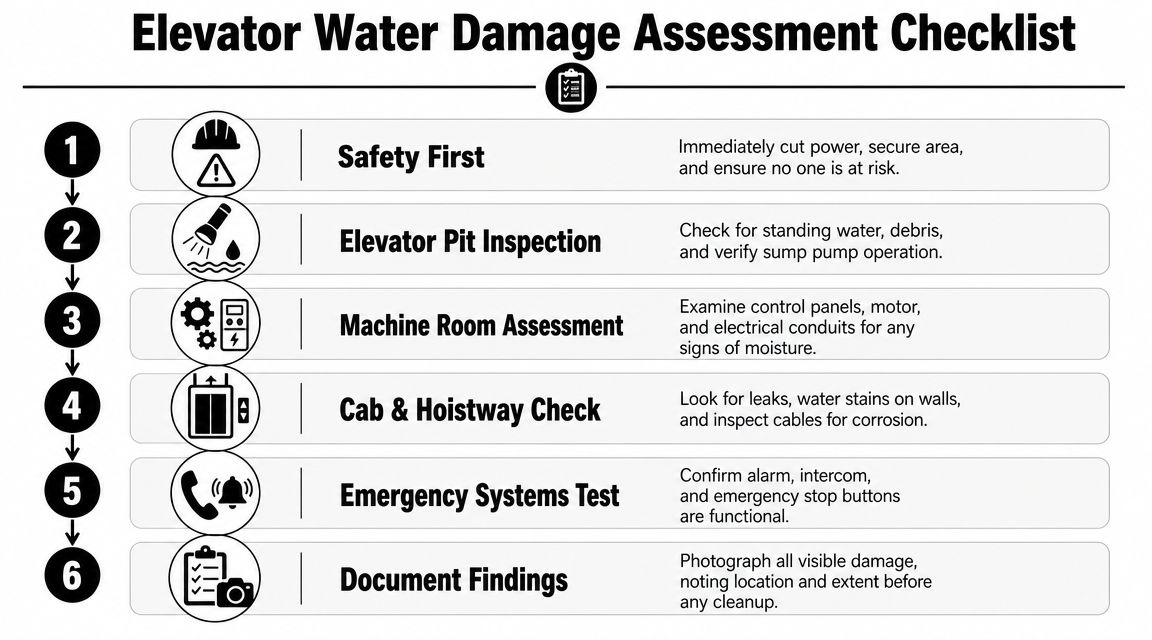
Start with the pit area
The pit is often where water shows up first because it's usually the lowest point tied to the elevator system. Resilience guidance notes that elevator pits are especially vulnerable and recommends float switches, alarms, and sump pumps, because a flooded pit can strand the cab, disable controls, and force replacement of parts such as governor cables, as described in flood resilience guidance for elevators.
From a safe position at the landing, look for:
- Standing water signs. Reflections, pooled water at the threshold, or visible wetness below the sill.
- Debris lines or mud. These show whether water rose and then receded.
- Pump evidence. If your building has pit drainage or alarms, note whether they activated.
- Rust staining or residue. That often tells you this isn't the first water event.
If the car is parked above and you can safely observe the pit opening with proper building procedures, don't lean in or try to descend. The purpose is to tell the elevator contractor what you saw, not to verify every component yourself.
You can also review flooded elevator pit service information if the pit appears to be the main point of intrusion.
Check the machine room or control area
This varies by equipment type. Some buildings have a separate machine room. Others have controllers or related equipment in designated spaces nearby. You're looking for moisture exposure, not diagnosing electronics.
Watch for:
- Water on the floor near cabinets
- Condensation or drip marks on controller enclosures
- Wet conduits or cable penetrations
- Signs of roof, pipe, or wall leaks above the equipment
- Moisture near the hydraulic power unit, tank, or pump on hydraulic systems
If you see any of that, assume the event is more serious than “a little water near the elevator.” Controls don't have to be submerged to be compromised.
Look at the hoistway and car
These clues matter because they can point to where the water entered and how far it traveled.
Use this quick checklist:
Landing doors and frames
Check for water tracks, swollen finishes, rust, or silt around the sill.Car interior
Look for stained ceiling panels, wet floor edges, unusual odors, or signs that water came through the doorway.Door behavior before shutdown
If staff noticed slow reopening, door reversal problems, or faults, note it for the technician.Visible cables or hardware
Don't touch them. Just note any discoloration, drips, or corrosion visible from safe areas.
Water doesn't need to flood an entire shaft to cause trouble. A drip path into a controller, door contact, or pit safety device can be enough to keep a unit out of service.
Don't test functions during assessment
A lot of managers want to check alarms, intercoms, lights, and door operation while they're already there. That instinct makes sense, but after water intrusion it's the wrong move unless a qualified elevator technician directs it. Your best contribution is a clear report of what you can see, smell, and confirm from outside the hazard area.
How to Grade the Severity of the Water Damage
Not every elevator water event means the same thing. A little dampness near a lobby entrance isn't in the same category as a wet controller or a flooded pit. Building managers in Detroit, Grand Rapids, Ann Arbor, and Lansing usually need a quick way to describe the problem when they call for help.
This three-level grading system works well because it ties visible conditions to immediate action. It's not a substitute for a technician's inspection, but it helps you communicate urgency accurately.
Elevator Water Damage Severity Levels
| Severity Level | Visual Indicators | Recommended Action |
|---|---|---|
| Minor | Damp floor near landing, isolated drip nearby, no visible water entering the sill, no signs of moisture near controls | Keep elevator out of service if water may have reached elevator components. Monitor the area, stop the leak source if safe, and arrange prompt professional inspection. |
| Moderate | Small puddles at the threshold, water stains inside the hoistway area, evidence that moisture may have reached door equipment or traveled downward | Shut down and lock out the elevator, secure the area, document conditions, and request urgent elevator service. Do not attempt restart after cleanup. |
| Severe | Standing water in the pit, water contact with controller area, submerged components, active water entering the shaft, or any report that the elevator operated during the event | Treat as an emergency. Keep the unit locked out, prevent access, address the building water source, and get immediate professional response before anyone attempts restoration. |
How to use the scale in the real world
A minor event is still not casual. If water is close enough to reach the sill, wick into a door zone, or drip from above, the safe assumption is that the elevator needs inspection before normal use returns.
A moderate event means you're no longer dealing with surface cleanup alone. Water may have moved into locks, contacts, wiring paths, or the pit. That usually turns into a testing and repair issue, not just drying.
A severe event is straightforward. If the pit took water, the controls got wet, or the elevator may have run while water was present, keep it down and let qualified personnel take over.
The fastest way to describe what you found
When you call for service, use language like this:
Location of water
“Water is visible at the lowest landing and may have entered the shaft.”Depth or spread
“There is standing water in the pit” or “there's moisture around the controller area.”System status
“The car is shut down and locked out” or “the unit had been running before we found the leak.”Source if known
“Likely stormwater,” “burst domestic line,” or “roof leak above machine room.”
That kind of report saves time. It helps the responding technician bring the right test equipment, replacement parts, and expectations.
Documenting Damage for Insurance and Repairs
Documentation starts before cleanup. If someone wipes down the lobby, pumps out water, or removes wet debris before you capture the conditions, you lose part of the record that insurers and repair teams rely on.
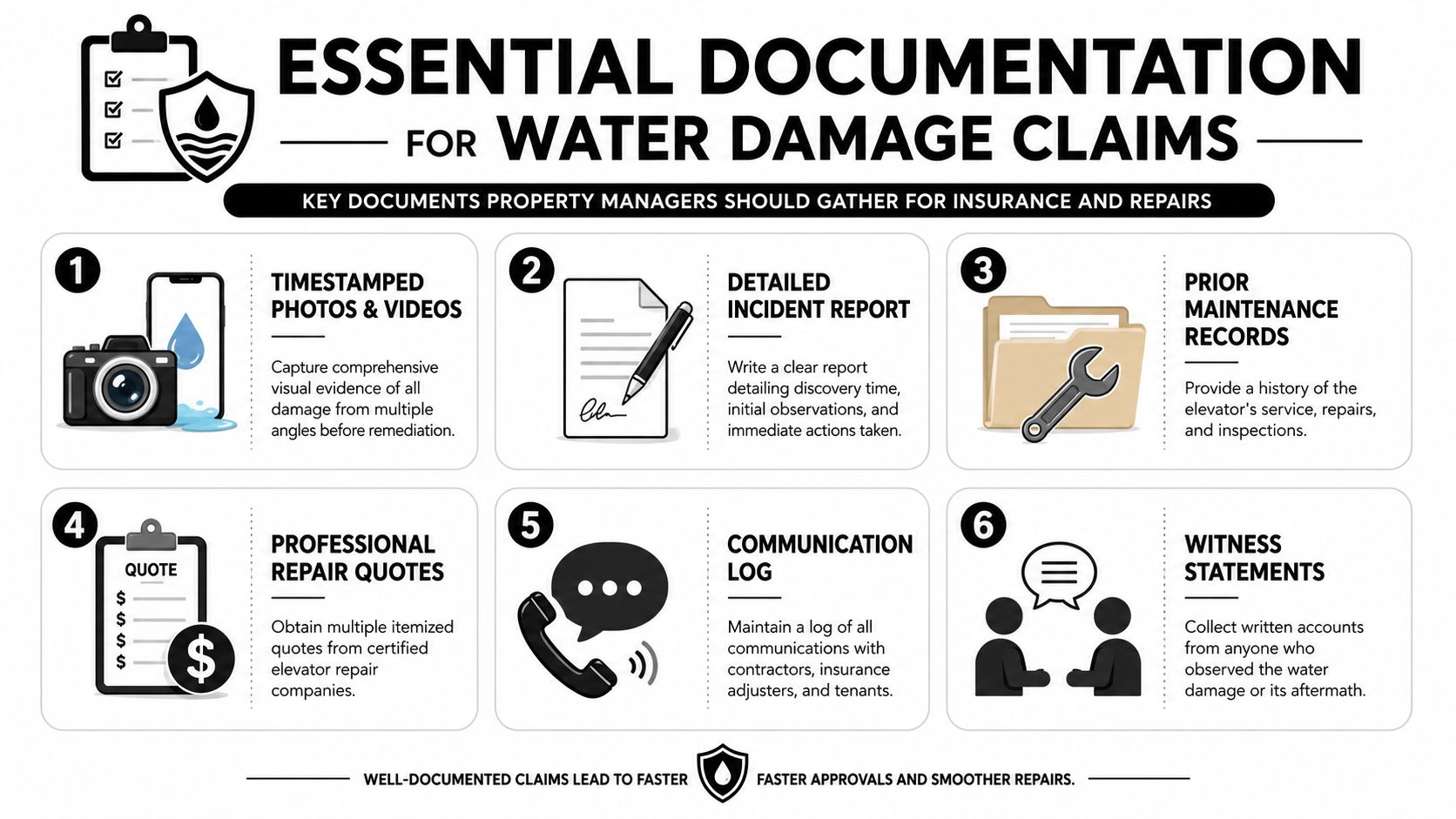
What to photograph and video
Take wide shots first, then close-ups. Use your phone if that's what you have, but make sure the images are clear and tied to the exact area.
Capture these items:
Overall scene
Hallway, lobby, machine room entrance, and any area showing water migration toward the elevator.Thresholds and sills
Include each affected landing.Pit-related evidence
Visible standing water, mud lines, debris, or alarm indication, if observable without unsafe access.Control-area exposure
Any drips, wet floors, stains, or condensation near control cabinets or hydraulic equipment.Probable source
Roof leak, pipe leak, seepage path, drain backup, or wall crack.Temporary protection measures
Barricades, caution signage, absorbent materials, and the locked-out status.
Keep a written incident log
Photos tell one part of the story. A written record fills in the timeline. Create a simple log in a note app, maintenance system, or paper form.
Include:
- Time discovered
- Who found it
- Weather or building event if relevant
- Which elevator or elevators were affected
- Whether the unit was operating at discovery
- When power was shut off
- Who was notified
- What immediate steps were taken
Field note: The most useful incident logs are plain and factual. Write what you saw, what you did, and when you did it.
Gather records before the adjuster or technician asks
Have these ready if possible:
- Recent maintenance records
- Any open service issues before the water event
- Inspection reports
- Building leak history in that area
- Communication notes from tenants, staff, or security
This matters for both insurance and repair planning. A technician who knows the elevator had prior door issues or recurring seepage at the pit can inspect with better focus. An insurer who sees a clear timeline and original conditions has fewer reasons to question the scope of loss.
Don't clean up the evidence too early
You should absolutely limit spread where it's safe to do so, but don't erase the event before it's documented. Water marks, debris patterns, and the first visible path of intrusion often explain whether the problem was stormwater, plumbing, groundwater, or building envelope failure. Those details affect what gets repaired and what has to be prevented next.
Mitigation Steps and When to Call a Professional
A common Michigan call starts the same way. Staff find water at the lobby entrance after a hard rain, the elevator still has power, and nobody knows whether the pit, controller, or door equipment got wet. At that point, speed matters, but so does restraint. The goal is to keep people out of danger, stop added damage, and avoid turning a repairable water event into an electrical failure.
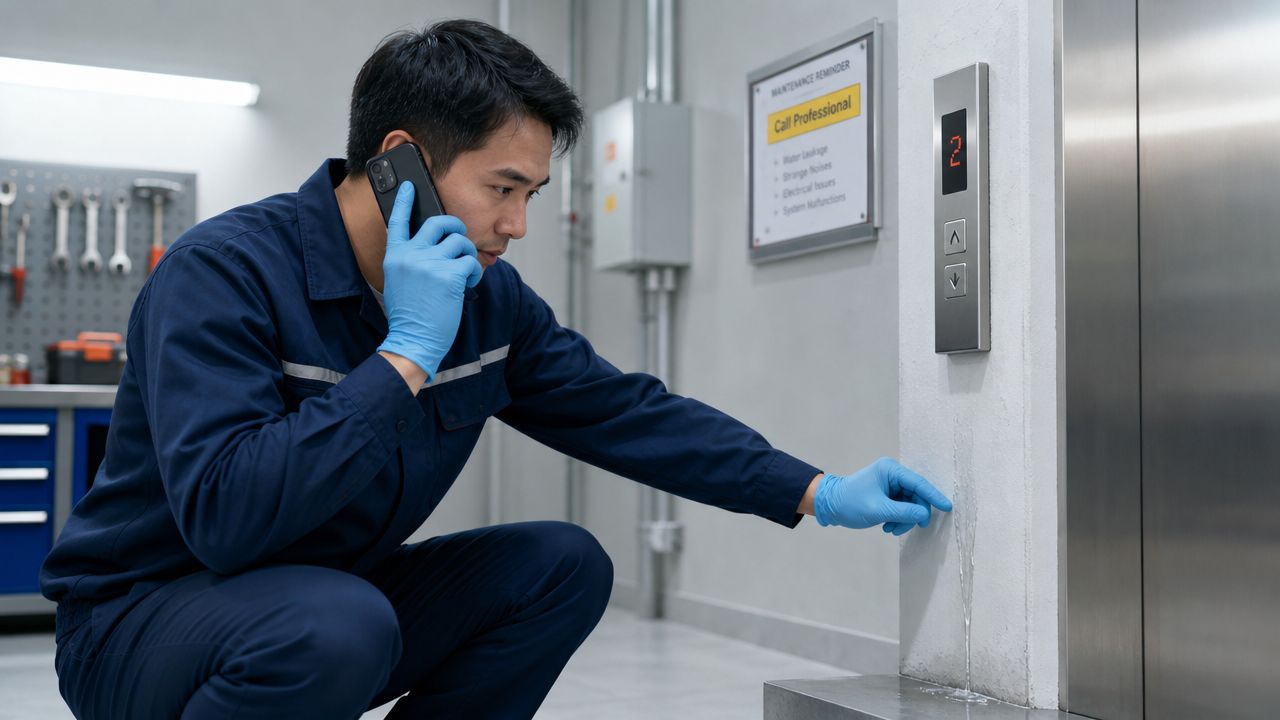
Safe mitigation you can do immediately
After the elevator is shut down and access is restricted, building staff can still do useful work around the affected area.
- Stop the water source if it is a plumbing leak, condensate issue, or other building system you can isolate safely.
- Keep people back from the landing area with cones, barriers, and clear signage.
- Protect nearby property such as paper records, tenant deliveries, carts, and stored materials that can be damaged or block technician access.
- Dry surrounding floor areas with mops, wet vacs, or absorbent materials, but keep that effort outside elevator electrical spaces.
- Run dehumidifiers in adjacent areas if airflow will not push moisture into the controller, hoistway openings, or door equipment.
- Check for continued water entry from roof drains, wall seepage, failed sump systems, or plumbing above the shaft.
That last point gets missed often. The puddle at the entrance may be the symptom, not the source.
What building staff should leave alone
Do not try to prove the elevator is fine by turning it back on. Water damage often stays hidden in door locks, wiring terminations, pit devices, brake components, and controller sections that look dry from the outside.
These tasks belong to qualified elevator personnel and, in some cases, licensed electrical or plumbing trades:
- Restarting the elevator after surface drying
- Opening electrical cabinets or controller enclosures
- Entering a wet or flooded pit
- Pumping out pit water without proper lockout, hazard review, and safe access
- Bypassing faults or safeties to test operation
- Spraying contacts, relays, boards, or locks with retail cleaners
- Running the car to check whether it still answers calls
As discussed in technical guidance on flooding impacts and elevator testing, proper return to service calls for inspection and electrical testing, not a visual check and a quick reset.
Clear triggers for calling a professional
Call an elevator contractor right away if any of the following occurred:
- Standing water is present in the pit
- Water reached the landing sill or ran under the doors
- Moisture may have reached the controller, machine room, disconnect, or traveling cable
- The elevator was operating during the leak or flood event
- Doors are dragging, not closing, or faulting after the incident
- Breakers tripped, fuses opened, or you smell overheated insulation
- The source of the water is still unknown
- The same area has had repeat seepage, pit water, or storm-related intrusion
In Michigan, freeze-thaw cycles, spring snowmelt, heavy summer storms, and aging below-grade waterproofing all raise the chance of recurring water entry. Older downtown buildings and lower-level service corridors are frequent trouble spots. If your property has a history of pit seepage or groundwater intrusion, elevator pit waterproofing solutions for Michigan buildings should be part of the repair discussion, not an afterthought after the next storm.
Here's a useful visual on why safe restoration takes more than cleanup:
Don't judge an elevator by car lights or a working hall button. Water-related faults often show up later, after corrosion starts or insulation weakens under load.
What works and what creates more damage
What works is disciplined control of the scene. Shut the unit down, contain the area, stop the water if you safely can, and get the right trades involved early.
What creates more damage is impatience. I have seen buildings lose extra days of service because someone tried a restart after “everything looked dry.” Once moisture gets into the wrong components, the follow-up failure is usually harder to trace and more expensive to correct.
Preventing Future Elevator Water Damage
The best long-term fix often isn't inside the elevator. It's in the building. Elevator pits naturally collect water from problems that start elsewhere, which is why repeat incidents usually trace back to drainage, seepage, waterproofing, or pump reliability rather than the elevator itself.
That's a point many cleanup-focused guides miss. The strongest prevention strategy is usually root-cause control at the building level first, then targeted elevator protection.
Building-side fixes that reduce repeat incidents
The most useful prevention work usually includes:
Exterior drainage corrections
Make sure grading moves water away from the structure, not toward pit walls or lower-level entries.Sump pump reliability
Test pumps, confirm discharge paths, and provide backup power where loss of power would also mean loss of drainage.Foundation and wall leak repair
Track recurring seepage paths instead of repainting over them.Plumbing and mechanical review
Repeated leaks above or near the shaft often come from neglected piping, drain lines, or condensate issues.Leak detection and alarms
Early warning gives staff time to shut down the elevator before water reaches a more damaging level.
Industry commentary on pit flood prevention emphasizes that elevator pits often receive water from wider building failures, and that building-side mitigation such as monitored sump pumps and pit waterproofing can stop repeat incidents before they damage expensive elevator components, as explained in guidance on elevator pit flood prevention and root-cause mitigation.
Elevator-specific protection that makes sense
Once the building-side issues are addressed, the elevator system itself should support resilience. Useful measures can include pit water detection, alarm integration, improved drainage planning, and waterproofing coordination around the pit structure.
For owners dealing with recurring seepage, elevator pit waterproofing options are worth evaluating alongside routine elevator maintenance. Waterproofing alone won't fix every water event, but it can reduce how often the pit becomes the collection point for a larger building problem.
Build the response into your maintenance plan
The properties that handle elevator water damage best usually do one thing differently. They don't rely on memory during a crisis. They keep a written response plan, identify who can shut down equipment, know where leak shutoffs are located, and include pit alarms, pumps, and known seepage points in preventive maintenance rounds.
That's especially important in Michigan, where weather swings, aging infrastructure, and mixed-use buildings can produce water events from several directions at once. Prevention isn't just about keeping the pit dry. It's about keeping tenants safe, protecting the controller and door equipment, and avoiding the kind of stop-start outage that turns one leak into weeks of disruption.
If you've found water in or near an elevator in Detroit, Grand Rapids, Ann Arbor, Lansing, or elsewhere in Lower Michigan, the safest next step is a qualified inspection before anyone tries to run the unit again. Crane Elevator Company provides elevator repair, maintenance, testing, and modernization support for commercial and residential properties, including water-damage-related service needs.