A hydraulic elevator rarely announces that it's approaching a major decision with one dramatic failure. More often, a facility manager in Detroit is weighing a repair bill against a growing list of callbacks, while an elevator still carries people every day. The question isn't just whether to modernize. It's which parts need attention, which can stay in service, and what needs to be tested before anyone signs a scope.
That distinction matters in Michigan and Ohio, where older hydraulic elevators remain in schools, offices, healthcare facilities, hotels, and multifamily buildings. A useful modernization plan starts with the equipment itself, not a generic package or a quote that treats every unit the same.
The Moment Every Hydraulic Elevator Owner Reaches
A school in Lansing gets an inspection deficiency. A medical office in Toledo is dealing with another service call. A hotel in Ann Arbor hears complaints about rough stops and doors that don't close reliably. Each problem may have a different cause, and none automatically means the whole elevator needs replacing.
The first useful move is to identify the symptom and trace it to a component. Poor leveling may point to valve adjustment, controls, or hydraulic conditions. Repeated door trouble may involve rollers, tracks, the operator, or interlocks. Oil in the pit raises a different concern: a leak that needs investigation, not a cosmetic cleanup.
Owners sometimes inherit these questions without a clear service history. That can happen in a Detroit office, a hospital near Grand Rapids, a municipal building in Flint, or a smaller property in Kalamazoo or Perrysburg. The right scope depends on what's failing, what remains serviceable, and what the applicable code requires after the work.
There's a reason hydraulic modernization remains a practical issue across the region. An engineering review reports that hydraulic elevator production in the United States overtook total traction-elevator production in 1973, and that hydraulic systems accounted for approximately 81% of U.S. elevator installations by 2000. That history helps explain the large installed base of hydraulic equipment still found in older buildings. The engineering review of hydraulic elevator history
The most useful question isn't “How old is the elevator?” It's “What evidence shows that this component needs repair, modernization, or replacement?” A component-by-component review gives owners a better basis for deciding what to do next.
What Hydraulic Elevator Modernization Actually Means
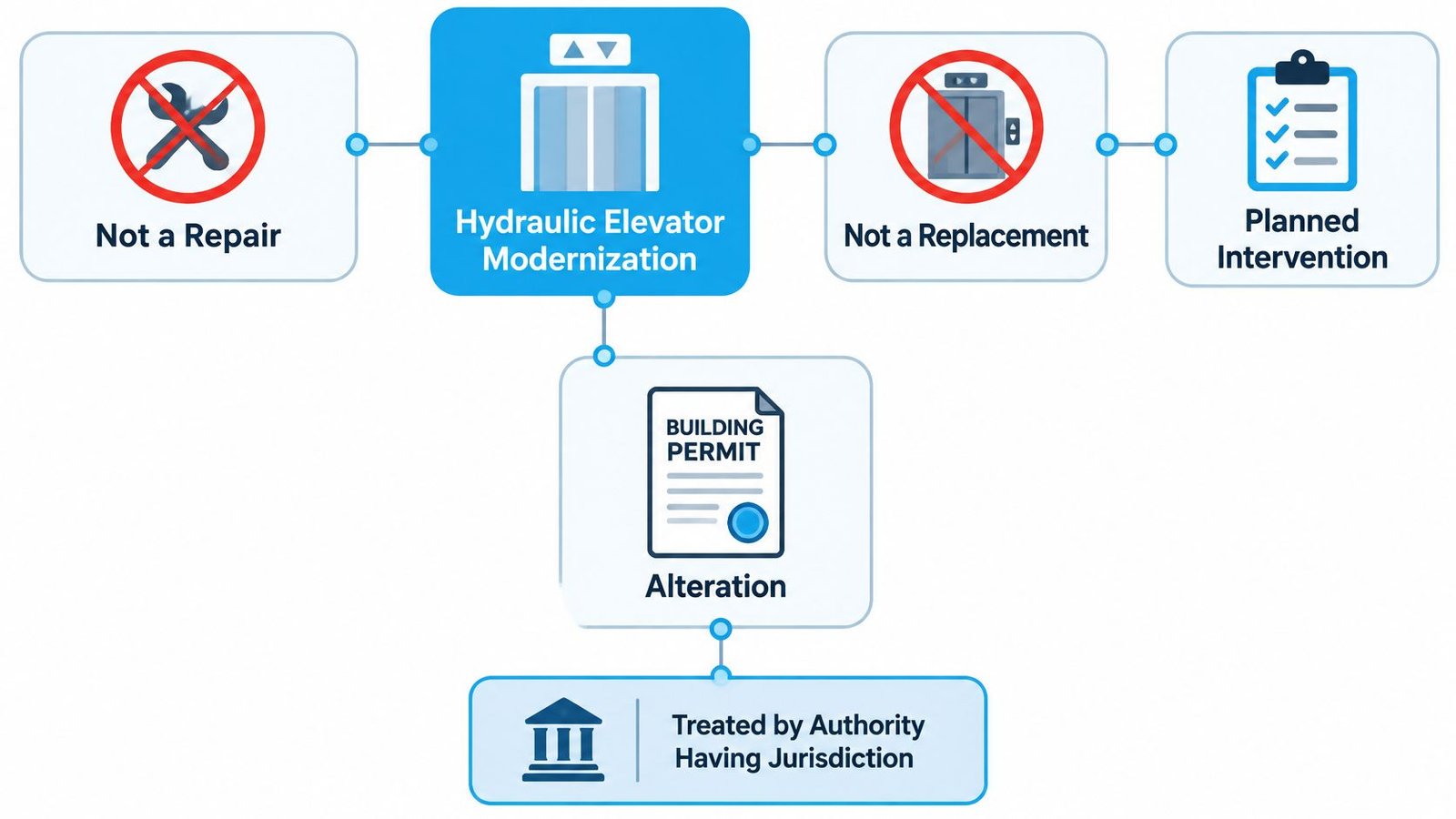
Modernization is a planned alteration to an elevator, not a routine repair and not necessarily a complete replacement. A repair restores a failed or worn part to service. A partial modernization updates a defined subsystem, such as the controller or door operator. A broader modernization may address the jack, power unit, valves, controls, door equipment, and safety-related components as a coordinated project.
The distinction matters because replacing one part can affect other equipment and can trigger code requirements. ASME A17.1/CSA B44 covers elevator design, construction, installation, operation, inspection, testing, maintenance, alteration, and repair. The jurisdiction determines which code edition applies to existing equipment and which requirements apply to altered components. ASME's overview of the elevator safety code
Start with the work boundary
Before selecting equipment, document what's installed and define what the contractor will change. A controller replacement, for example, isn't a complete modernization if the aging door equipment or hydraulic system remains outside the scope. That may be a reasonable staged approach, but the boundary and remaining risks should be explicit.
A code survey helps establish the boundary. Record the installation and alteration history, identify the adopted code edition, list the components to be replaced, and ask the authority having jurisdiction how the proposed work will be classified. That conversation should happen before equipment is ordered, not after the project reaches inspection.
Owners should also ask what “non-proprietary” means in the proposed scope. In practical terms, the equipment and documentation should allow qualified elevator providers to maintain the system, rather than needlessly restricting future service to a single source. That choice affects the building's options after the modernization is complete.
The Car, Hoistway, and Door Components That Shape Every Ride
Passengers notice the car, the doors, and the way the elevator stops. Those visible parts also offer useful clues. Doors that hesitate, scrape, reopen unexpectedly, or fail to close consistently deserve a careful inspection before anyone blames the controller alone.
Start where passengers interact with the equipment
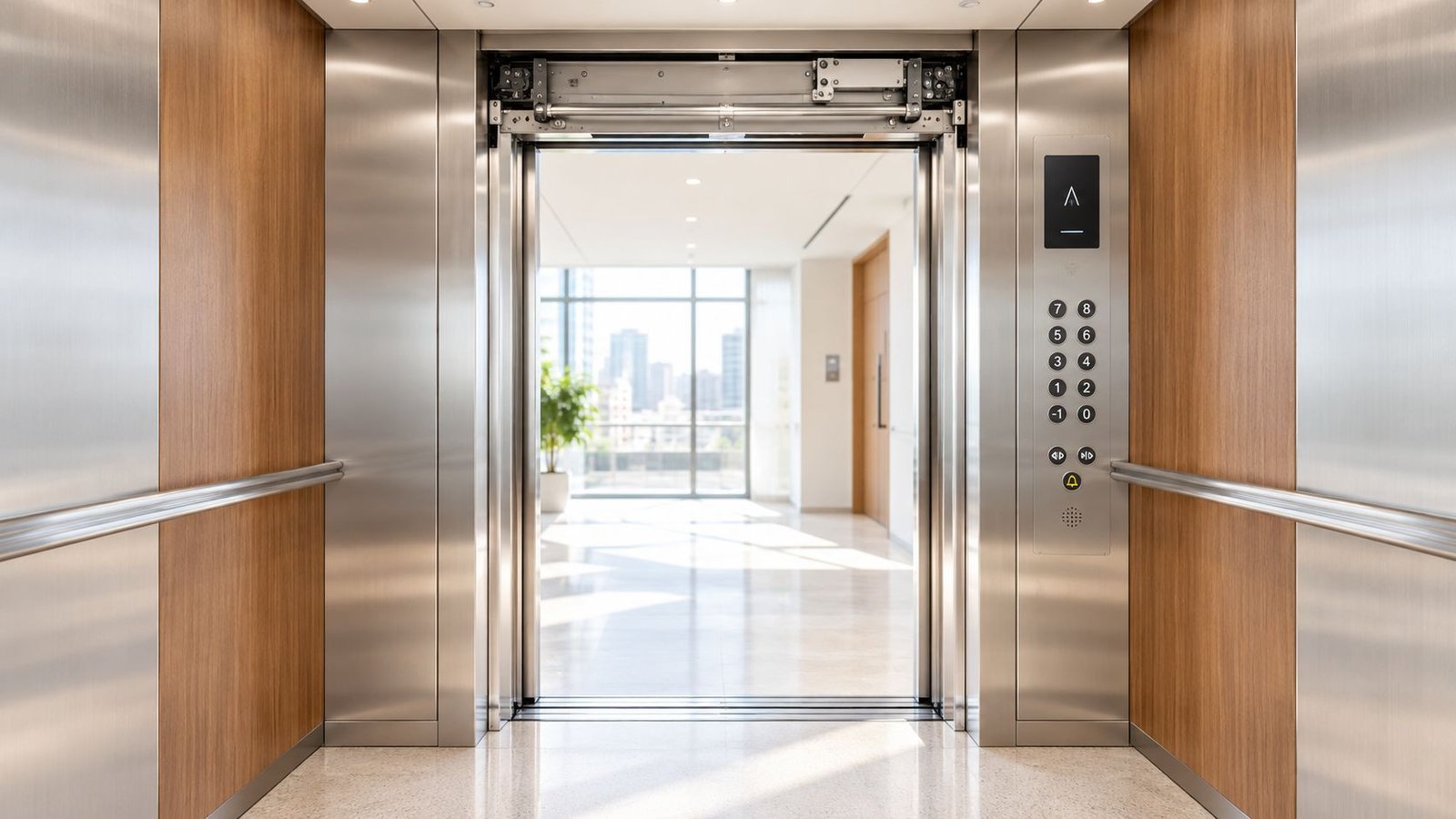
The car operating panel, hall stations, cab interior, and car doors are the parts people use directly. Worn buttons or damaged fixtures may call for replacement, while an unreliable door may need cleaning and adjustment, new rollers, a door-operator repair, or a more extensive upgrade. A worn cab finish can improve the passenger experience, but it won't correct poor leveling or a faulty door lock.
In the hoistway, each landing door must work with its interlock so the car can't travel when a door isn't secured. Ohio workplace rules address controls that prevent the car from leaving a landing until doors are closed, interlocks that keep hoistway doors closed when the car is away, door-reopening devices, leveling, and safeguards against car movement at a landing. These mechanisms need to function correctly between inspections, not just on test day. Ohio's workplace rules for elevator mechanisms
Door contacts and interlocks shouldn't be bypassed to keep an elevator running. A jumper may hide a fault, but it also defeats the intended safety function. The proper response is to diagnose the contact, wiring, alignment, or door hardware and correct the cause.
Separate ride complaints from appearance complaints
If a wheelchair user can't roll onto the car smoothly, check leveling and stopping accuracy rather than assuming the cab needs a cosmetic renovation. Owners evaluating access should review the actual landing conditions and applicable requirements alongside the elevator scope. Crane's guidance on elevator accessibility requirements
The car, doors, and landing interface should be checked together. Clean tracks and verify door movement first; replace parts when inspection shows wear or unreliable operation. Then record leveling and door behavior under operating conditions, so the building has a clear baseline for future service.
The video below offers another visual look at elevator modernization and its components.
Controllers, Controls, and the Safety Devices Wired Around Them
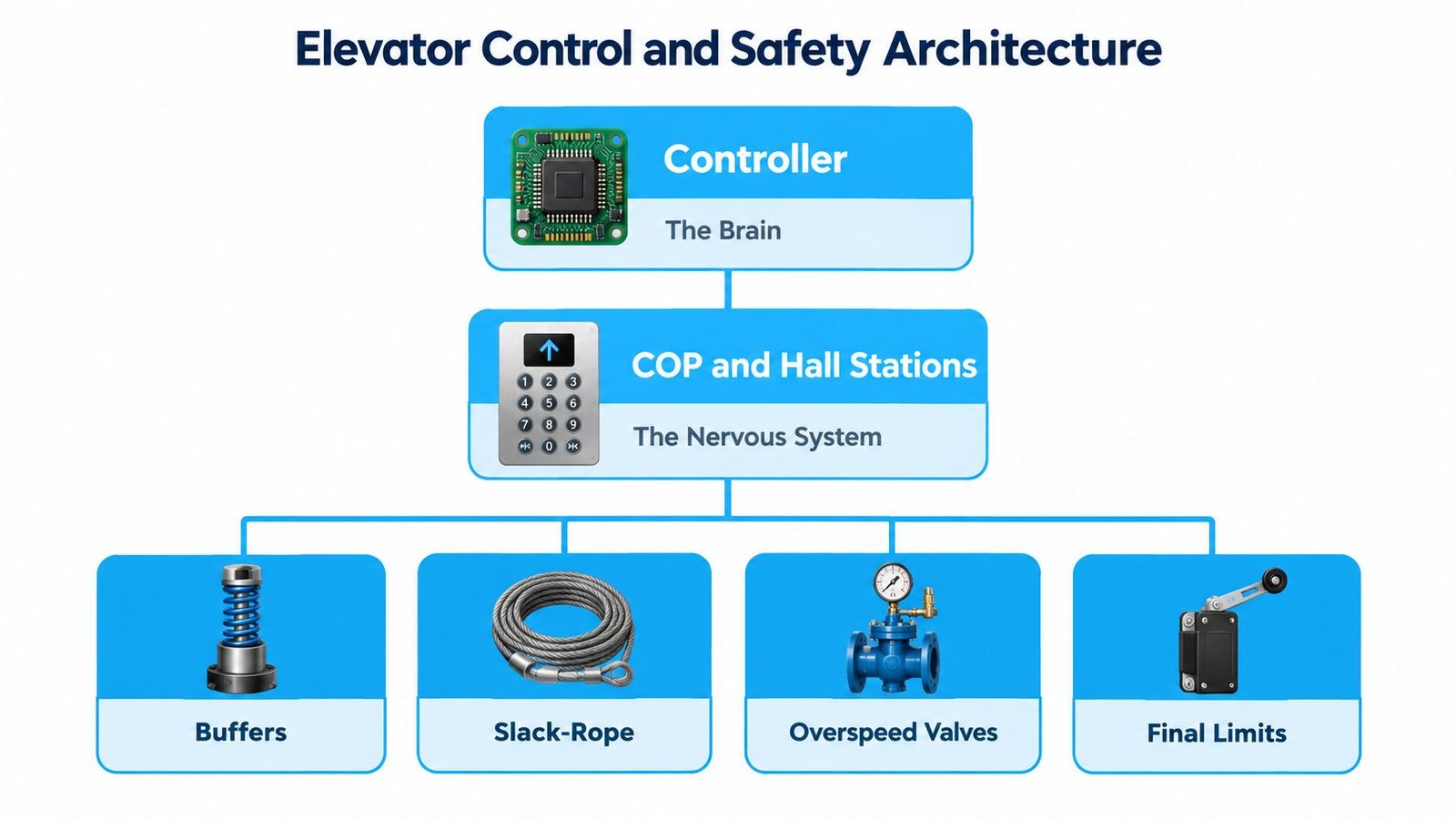
The controller coordinates elevator movement, door operation, calls, and safety circuits. The car operating panel and hall stations are where passengers give commands. Safety devices provide protections when normal operation can't continue. Replacing a controller without checking the equipment wired to it can leave the building with new controls connected to old, unreliable parts.
Trace the safety chain
Older relay-based controls and early microprocessor systems may become harder to support as parts wear or become difficult to source. A controller modernization can provide a new foundation for reliable operation, but it should also identify how the fire-service functions, emergency communications, door circuits, and other safety devices are connected and tested.
Depending on the elevator design, the safety review may include buffers, final limits, overspeed valves, emergency phones, and fire-service equipment. Not every device applies to every unit, so the contractor should document what's present and what the system requires. A buffer that needs attention or an emergency phone that doesn't connect reliably won't be fixed by installing a controller.
A controller is only as dependable as the devices and circuits it monitors.
A complete acceptance plan should state how the contractor will verify operation after the alteration. Public-sector specifications can provide useful examples of measurable criteria: one hydraulic-modernization specification sets limits for controlled acceleration and retardation at 0.1G, maximum acceleration and retardation at 0.2G, and floor-level stopping accuracy within 3 mm (0.125 in.) above or below the floor regardless of load. It also specifies door opening at 2.5 ft/s and closing at 1 ft/s. Those are requirements in that specification, not universal guarantees for every project. The public-sector hydraulic modernization specification
Make testing part of the scope
Ask for test procedures and records, not a general promise that the elevator will “run smoothly.” The contractor should explain which functions will be tested, what instruments or methods will be used, and how deficiencies will be recorded and corrected. The scope should also identify testing of emergency phones and fire-service features when applicable.
A controls project is a sensible entry point when the controller is unreliable or unsupported and the hydraulic equipment remains sound. It's a poor substitute for investigating a leaking jack, unreliable door locks, or other known defects. For a plain-language overview of the protective components, see Crane's guide to elevator safety devices.
The Hydraulic Side, Jack, Power Unit, Tank, Valves, and Seals
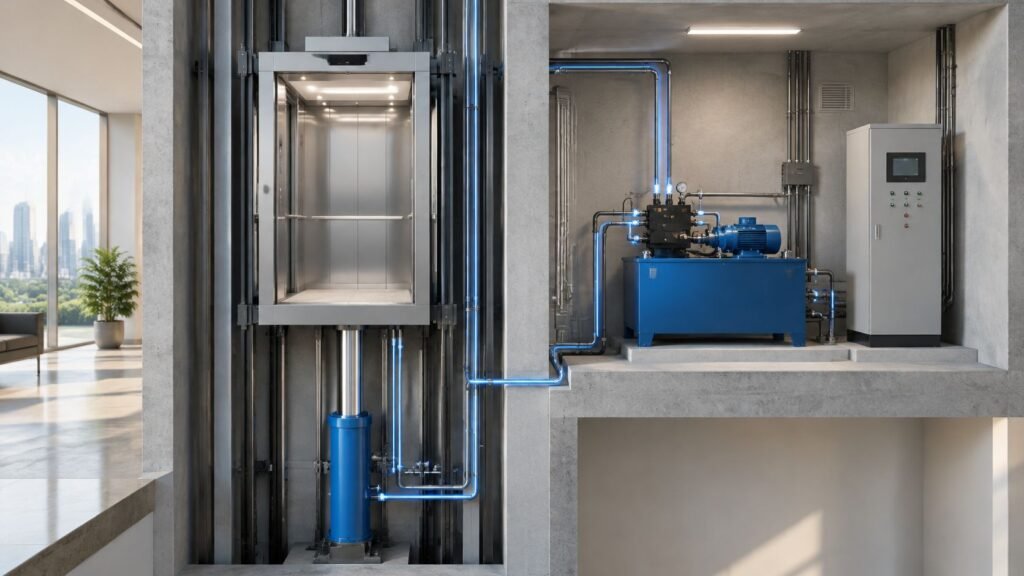
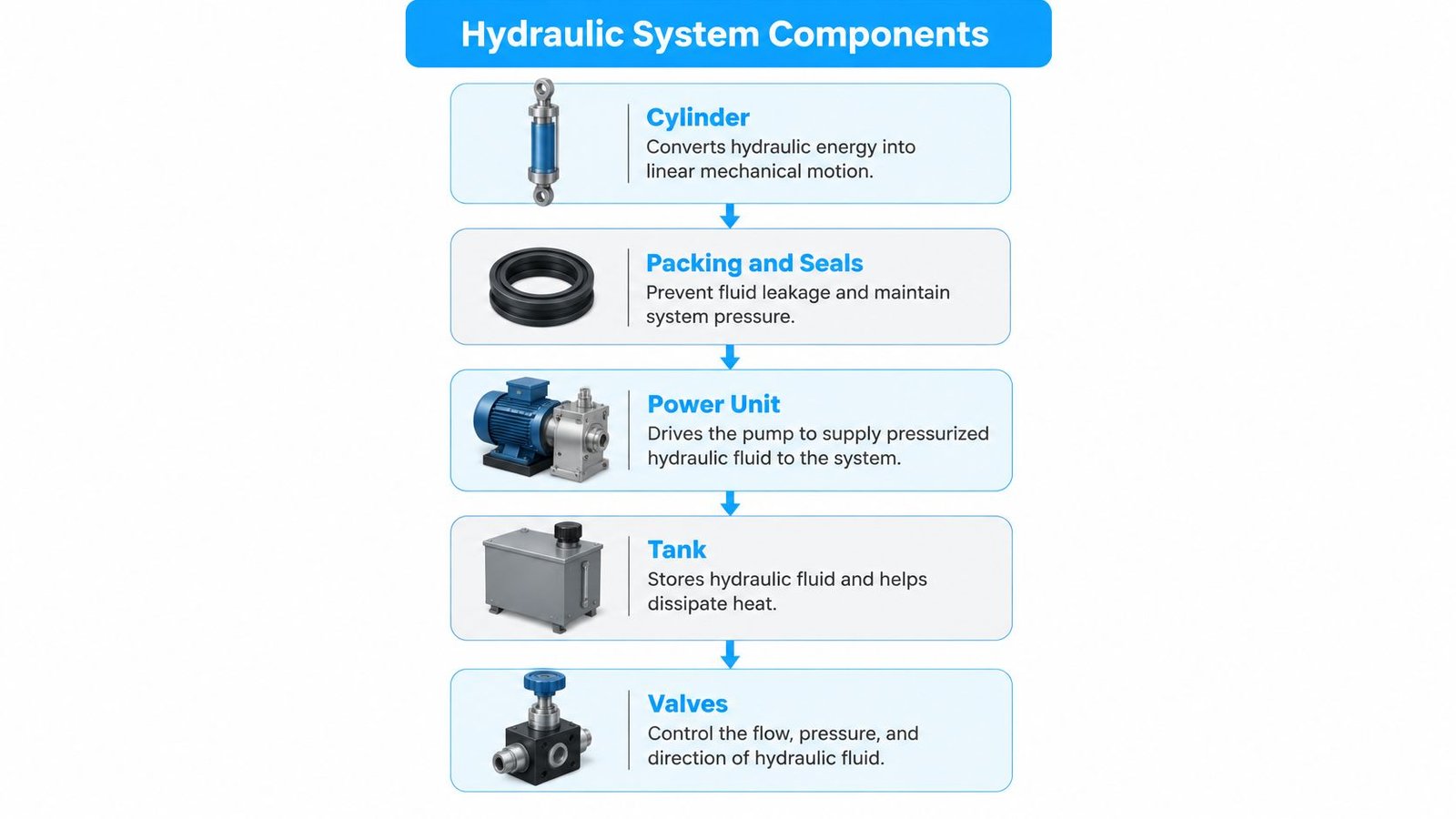
A hydraulic elevator's condition depends on more than its motor and pump. The jack or cylinder moves the car, packing and seals help retain oil, the power unit delivers hydraulic flow, and the tank holds the fluid. Valves control how the system starts, travels, levels, and stops.
Find the source of the oil
Oil in the pit isn't a minor housekeeping issue. It can point to a leak from the jack, piping, fittings, or another part of the hydraulic system. A packing leak may be repairable without replacing the whole power unit, but that decision should follow an inspection that identifies where the oil is escaping and whether the surrounding components remain serviceable.
The power unit typically includes a motor, pump, valves, and related equipment. A unit that runs poorly may need valve adjustment or a targeted repair; worn or unsuitable equipment may justify a larger upgrade. The tank and piping also need attention, including appropriate oil containment and a check for leaks. A new pump won't resolve a deteriorated cylinder, and new controls won't stop a leak.
Buried cylinders deserve particular scrutiny because problems may remain out of sight. Owners should gather available installation and repair records, inspect the pit and accessible equipment, and ask how the cylinder's condition and any soil or groundwater concerns will be assessed. Michigan-specific educational material describes replacement or corrosion-protection options for buried cylinders lacking a double cylinder or safety bulkhead, including monitored cathodic protection, protective coatings, and corrosion-resistant casing.
Hydraulic systems must not leak. Commissioning should include pressure testing and documentation of relevant fittings, valves, jack seals, and the tank, rather than leaving those checks for routine maintenance after turnover. ASME elevator-code material on hydraulic system requirements
Choose the intervention that matches the evidence
A packing repair and valve adjustment may be appropriate when the jack and power unit are otherwise in serviceable condition. A power-unit upgrade may make more sense when the motor, pump, or valves repeatedly cause poor performance. Jack replacement or protective measures call for a separate assessment of cylinder condition, code interpretation, and environmental exposure.
Some hydraulic units also use roped arrangements with sheaves and cables, or other configurations that affect the modernization scope. Don't assume that a familiar-looking unit has the same layout as another building's elevator. A contractor should identify the actual arrangement before specifying replacements. For context on the pump's role in the system, consult Crane's overview of hydraulic elevator pumps.
Putting the Pieces Together: Energy, Performance, and the Decision
By this point in a project, I tell owners to stop reading the quote and start reading the component list. The choice comes down to three paths: keep maintaining the unit as it stands, modernize selected components, or replace a larger share of the system. Repair history, recurring failures, parts availability, downtime, inspection findings, accessibility needs, energy use, and the service level the building requires all belong in that comparison. A low number on a proposal means little if the jack or the power unit stays untouched and keeps failing.
Energy savings get oversold on these jobs. The American Council for an Energy-Efficient Economy identifies cab lighting, ventilation, door-operating motors, correct valve adjustment, and sequential standby modes as improvement areas, and its assessment concludes that suitable modernization approaches can reduce hydraulic energy use by approximately 50% in some applications. The ACEEE hydraulic elevator energy-efficiency assessment A lightly used two-stop elevator will not approach that figure. I have watched owners budget against the best-case number, then question the whole project when the utility bills barely moved. Measure first.
Compare work by the problem it solves
| Component | Primary role | Common issue | Modernization impact |
|---|---|---|---|
| Door operator and doors | Opens and closes the car and landing doors | Wear, poor adjustment, unreliable operation | Can improve door reliability and passenger access |
| Controller | Coordinates calls, movement, and safety circuits | Unreliable operation or difficult-to-source parts | Updates control functions and supports documented testing |
| Pump, motor, and valves | Moves and controls hydraulic fluid | Poor adjustment, wear, or inconsistent travel | Can improve hydraulic performance and energy use |
| Jack, packing, and seals | Supports car movement and retains fluid | Leakage, wear, or hidden cylinder concerns | Addresses hydraulic reliability and potential environmental exposure |
| Tank and piping | Stores and conveys hydraulic fluid | Leakage, unsuitable condition, or inadequate containment | Can improve containment and make leaks easier to manage |
Before approving work, record the elevator's current energy use and operating profile, then agree on how results get checked after turnover. On performance, make the contractor define the acceptance tests in writing: which loads and trips get tested, what leveling accuracy gets recorded, and what happens when a test fails. One public project specification uses speed variation within 5% across load conditions, alongside the acceleration, leveling, and door criteria cited in the controls section.
Then weigh the components themselves. If the cylinder, power unit, doors, and controls are serviceable and compliant, targeted work usually beats broad replacement on cost and disruption. If several major components are deteriorating at once, or the building cannot absorb recurring downtime, a coordinated scope is easier to defend to ownership than another round of piecemeal repairs.
How This Plays Out Across Michigan and Ohio
The right scope looks different in different buildings. A hospital in Detroit may prioritize reliable service and a careful work schedule. A university in Ann Arbor may be looking at ride quality and energy use. A manufacturing site near Grand Rapids could be dealing with an older hydraulic freight elevator whose downtime affects operations. The first step in each case is the same: determine which component is responsible for the problem and what the building needs from the elevator.
A municipal facility in Lansing might need to prepare its equipment and records for upcoming safety testing. A school in Flint may be focused on inspection findings and dependable daily access. In Kalamazoo, a residential property manager may need service for a wheelchair lift as well as the building's elevator. A smaller property in Perrysburg or another Ohio town may need a contractor able to assess the complete system rather than just one familiar component.
Local inspection requirements shape planning, and owners should confirm the current rules for their equipment with the appropriate authority. Michigan's rules list general inspection intervals of at least every 12 months for passenger, freight, inclined, limited-use/limited-application, special-purpose personnel, rooftop, material-lift, barrier-free lifting, escalator, moving-walk, and other specified devices. Dumbwaiters, stairway chairlifts, one-person elevators, platform lifts, and power sidewalk elevators generally require inspection at least every 24 months, with the applicable details set by the state rules. Michigan's elevator rules and inspection categories
Crane Elevator Company serves Detroit, Lansing, Ann Arbor, Grand Rapids, Toledo, Perrysburg, Flint, Kalamazoo, and surrounding Michigan and Ohio communities. Its services include maintenance, repairs, inspections, testing, code corrections, and modernization for elevators and other vertical-transportation equipment. Its stated non-proprietary approach is intended to leave equipment serviceable by qualified providers. For a facility manager, that means the scope should cover the actual system and its future service needs, whether the project involves a hydraulic passenger elevator, freight car, residential elevator, wheelchair lift, or dumbwaiter.
When Modernization Is the Wrong Answer and What to Ask Anyway
Modernization isn't automatically the right choice. If the equipment is serviceable and code-compliant, a disciplined maintenance plan with targeted repairs may provide better value than replacing components without a demonstrated need. But a controller upgrade won't settle a buried-cylinder concern, and repeated delays can leave a building carrying avoidable risk.
Before signing, ask the contractor which code edition and alteration requirements apply, what evidence supports replacing each component, how the buried cylinder will be assessed, what parts will remain difficult to obtain, and what acceptance tests and records the project includes. Ask whether the proposed equipment is non-proprietary and what the building should expect at its next required test.
Ohio requires covered elevators to undergo periodic safety testing under the adopted ASME A17.1 code and A17.2 inspection guide, including a full-load safety test at least once within each five-year period under ASME A17.1 Section 8.6.4.20. Build that requirement into the project schedule and confirm the applicable testing details with the authority having jurisdiction. Ohio's periodic elevator testing rule
Ask Crane Elevator Company for a component-level assessment, a competitive modernization quote, or a free second opinion before committing to a scope. Its team provides elevator maintenance, repairs, testing, inspections, and non-proprietary modernization across Michigan and Ohio, with financing options available for qualifying projects. To discuss what your hydraulic elevator needs, visit Crane Elevator Company.